
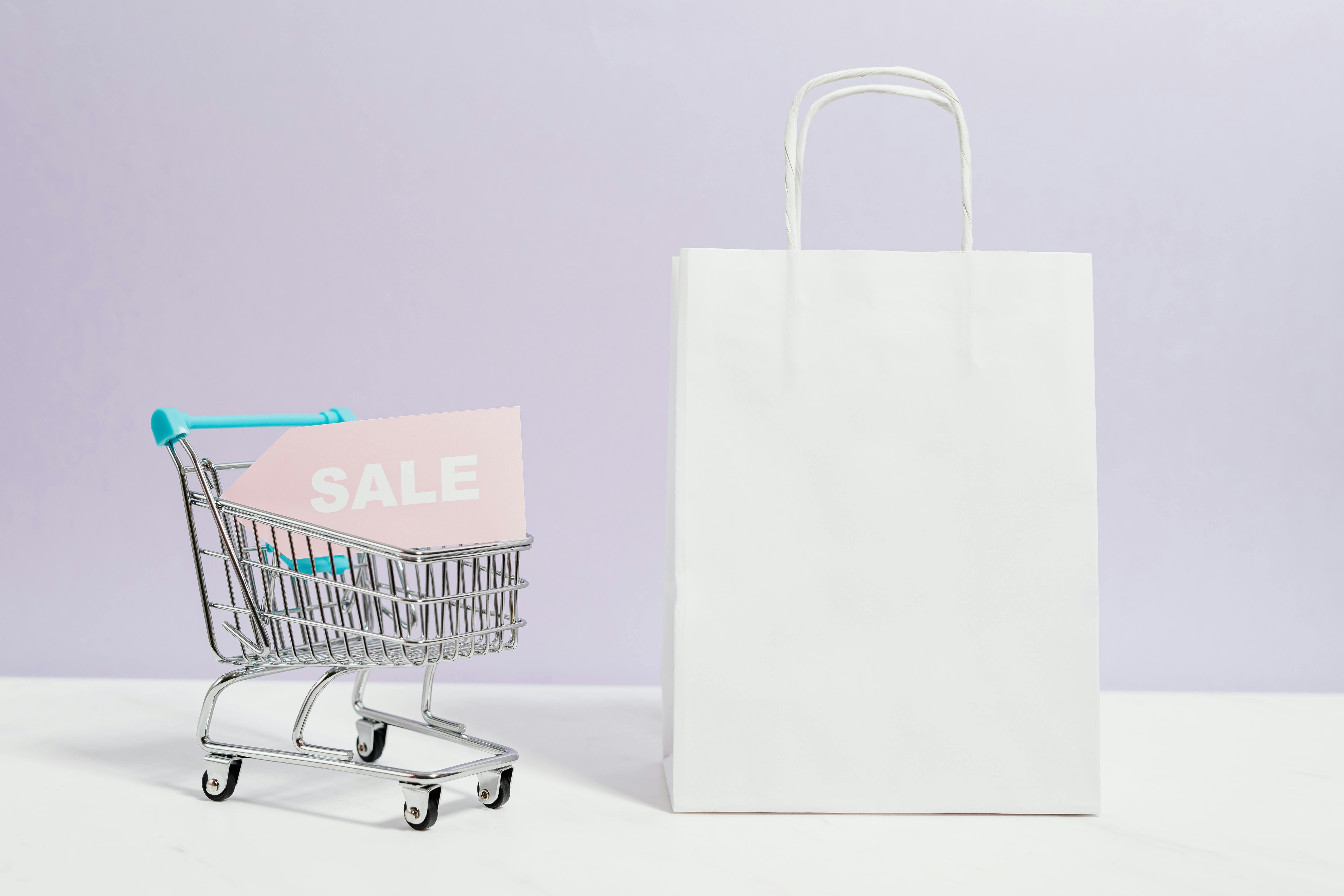
You walked into the store for one thing. You left with six. Or you opened the app to check something and ended up with three items in your cart — and no memory of deciding to buy any of them.
Impulse buying isn’t a character flaw. It’s the intended result of billions of dollars in behavioral science, retail design, and digital engineering working together to make purchasing feel automatic and irresistible. Understanding why it works — and having specific tactics to counter it — is the difference between a spending pattern that drains your finances and one you actually control.
Why Impulse Buying Is So Hard to Stop
Impulse purchases aren’t random. They’re triggered. Retailers and app designers have spent decades studying exactly what conditions produce unplanned purchases, and they engineer those conditions deliberately.
The time pressure trigger. “Limited time offer.” “Only 3 left.” “Sale ends tonight.” Scarcity and urgency short-circuit deliberate decision-making. When your brain perceives that something might be unavailable soon, it shifts from evaluating whether you want something to focusing on not missing out.
The discount framing trigger. A $60 item marked down from $100 doesn’t just feel affordable — it feels like you’re making money. The psychological pain of spending $60 is offset by the perceived gain of a $40 “savings.” You weren’t shopping for this item five minutes ago, but now not buying it feels like a loss.
The emotional state trigger. Stress, boredom, loneliness, and anxiety all increase impulse buying. Shopping triggers a dopamine release — a neurological reward that temporarily relieves negative emotional states. The relief is real, even if brief. This is why people shop when they’re unhappy, and why online retail does so well late at night when emotional regulation is lowest.
The friction removal trigger. One-click purchasing, saved payment methods, same-day delivery — every layer of friction removed from the purchase process is a layer of deliberation removed. When buying takes ten seconds, there’s no natural pause for second-guessing.
The social proof trigger. “Bestseller.” “10,000 people bought this today.” “Your friends are interested in this.” Social validation reduces uncertainty and speeds purchase decisions. If everyone else is buying it, the decision feels validated without analysis.
The True Cost of Impulse Buying
Research suggests the average American spends $314 per month on impulse purchases. That’s $3,768 per year — money that could instead fund a full Roth IRA contribution, pay off significant credit card debt, or build a meaningful emergency fund.
But the cost isn’t only financial. Repeated impulse purchases often create clutter (physical and psychological), buyer’s remorse, and a sense of being out of control with money. Over time, this pattern can contribute to financial anxiety and undermine confidence in your ability to manage money.
For people working toward specific financial goals — paying off debt, saving for a house, building an emergency fund — impulse spending is often the primary leak in an otherwise sound financial plan.
Practical Tactics That Actually Work
Willpower alone doesn’t reliably stop impulse buying. The retail environment is engineered specifically to overcome it. What works instead are systems — defaults and friction that make impulse purchases harder and deliberate purchases easier.
The 24-hour rule (48 for larger purchases). When you feel the urge to buy something unplanned, add it to a list and wait. Not forever — just 24 hours. If it still feels necessary after a day, you can reconsider. The majority of impulse urges diminish significantly with a short delay. For purchases over $50, extend the waiting period to 48 hours.
Shop with a list and a limit. Go to the store (or website) with a written list and a defined spending limit. Both elements matter. The list gives you a clear scope of intent. The limit creates a hard constraint. Without either, every purchase decision is made in the moment — exactly the conditions that produce impulse buying.
Remove stored payment methods. Adding friction to the purchase process directly reduces impulsive buying. Delete saved credit card information from shopping sites. Require yourself to manually enter payment details for online purchases. The 30–60 seconds this adds creates a genuine decision point rather than a reflex.
Unsubscribe from retail marketing. Promotional emails are engineered to produce impulse purchases. Sales announcements, “just for you” deals, cart abandonment reminders — all are designed to reactivate purchase intent at moments of vulnerability. Use a tool like Unroll.me or go through your inbox and unsubscribe from any retailer you didn’t deliberately seek out.
Avoid browse-shopping when emotional. If you notice you’re stressed, bored, or lonely and find yourself opening a shopping app or website without a specific purchase in mind — close it. Browse-shopping in a negative emotional state is the highest-risk context for impulse purchases. Replace the behavior with something else: walk, call a friend, do something physical.
Use a separate “wants” budget. A rigid zero-tolerance approach to discretionary spending often leads to resentment and eventual backslash spending. Instead, allocate a specific monthly amount for unplanned or want-based purchases. When it’s gone, it’s gone. This approach, built into frameworks like the 50/30/20 rule, channels impulse spending into a defined budget rather than trying to eliminate the desire entirely.
Apply the cost-per-use calculation. Before buying, estimate how many times you’ll actually use the item. Divide the price by that number. A $180 jacket you wear 60 times costs $3 per wear — potentially good value. A $40 kitchen gadget you use once costs $40 per use. This reframes “affordable” in terms of actual value rather than sticker price.
Special Case: Online Shopping
Online retail deserves its own tactics because the environment is specifically optimized for impulse behavior in ways physical stores aren’t.
- Use browser extensions that block ads (uBlock Origin) — fewer promoted products means fewer unplanned purchase triggers
- Add items to cart but don’t checkout immediately — treat the cart as a wishlist and revisit it 24 hours later
- Avoid shopping at night — decision-making quality declines with fatigue; impulse buying is significantly higher in late-night browsing sessions
- Turn off push notifications from retail apps — each notification is a designed purchase trigger; removing them reduces the number of impulse moments
Special Case: Sales and Clearance
Sales are the most psychologically sophisticated impulse purchase environment. The discount framing makes not-buying feel like a mistake.
The useful reframe: a discount only saves you money if you were going to buy the item anyway. A 50% off item you didn’t need costs you 50% of its price, not saves you 50%. The question isn’t “is it a good deal?” It’s “would I buy this at full price if there were no sale?”
If the answer is no — you wouldn’t buy it at full price — then the sale price doesn’t represent savings. It represents a discounted impulse purchase.
The Mindset Shift That Makes Tactics Work
Tactics help, but the underlying reframe is more powerful: every purchase decision is a trade-off between your present self and your future self.
When you spend $50 on an impulse purchase, you’re not just spending $50 today. You’re eliminating $50 from your emergency fund, debt paydown, or investment account. Depending on your situation, that $50 invested could become $200 or more over 20 years.
This isn’t about guilt. It’s about clarity. Once you truly internalize the trade-off — not abstractly, but as a vivid calculation — impulsive purchases start to feel less like wins and more like costs. The $40 sale item stops looking like savings and starts looking like the $40 you’re redirecting away from your actual goals.
Impulse buying will never completely disappear. But with the right systems in place, it can become the exception rather than the rule — and the money it was consuming can start building the financial security you actually want.