

The savings account vs checking account question trips up a lot of people, and the short answer is that you usually want both. A checking account is built for money that moves: paychecks in, bills and groceries out. A savings account is built for money that sits: an emergency cushion, a vacation fund, a down payment in progress. Each does one job well and the other job poorly. A savings account vs checking account comparison is really a comparison of jobs.
This guide explains the difference between checking and savings accounts in plain English, then goes further than most comparisons. You will see a side-by-side table, a worked example that splits a $4,200 monthly paycheck across accounts, a decision worksheet, and a step-by-step walkthrough for opening each account. All dollar figures in the examples are illustrations, not quotes or forecasts.
This article is general education, not financial advice. Bank terms vary, so always read the fee schedule and account agreement for the specific account you are considering.
Table of Contents
The short answer: checking for spending, savings for saving
If you only remember one idea, make it this one. A checking account is where your everyday life runs. A savings account is where money waits for a purpose. Most households do best with at least one of each, kept at the same bank or linked through a free transfer.
Savings account vs checking account in one minute
Checking accounts come with a debit card, checks, bill pay, and unlimited transactions. They usually pay little or no interest. Savings accounts pay interest, often much more than checking, and they are designed for fewer, larger moves in and out. They typically do not come with checks, and the debit card, if offered at all, may be limited.
Think of the savings account vs checking account pair this way: checking is your wallet and savings as your safe. You would not carry a month of rent in your wallet, and you would not want to open a safe every time you buy coffee.
Do you need both in a savings account vs checking account setup?
Almost always, yes, and the savings account vs checking account pairing is the usual starting point. Keeping everything in checking makes it easy to overspend and hard to see what is really saved. Keeping everything in savings means fighting friction every time you pay a bill. Having two accounts creates a simple wall between money you will spend this month and money you are protecting for later.
There are exceptions. Someone with a tiny balance and a tight month may keep only checking for a while. Someone who is fully cash-flow stable might hold several savings accounts. But for most people, the pairing is the starting point.
Savings account vs checking account: what checking is for
In any savings account vs checking account comparison, checking is the account designed for frequent transactions. Your employer deposits your pay there, and your rent, utilities, subscriptions and card payments leave from there. It is the hub of your financial life.
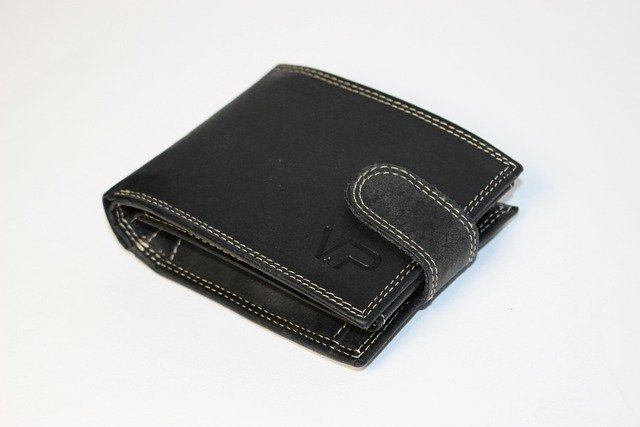
Core features of a checking account
- A debit card for purchases and ATM withdrawals.
- Check writing, or at least the ability to send paper checks through bill pay.
- Direct deposit for paychecks, benefits and tax refunds.
- Online and mobile bill pay, plus peer-to-peer transfers through linked apps.
- No set cap on how many payments you make each month.
Savings account vs checking account: what savings is for
On the savings side of the savings account vs checking account divide, you keep money you do not plan to spend soon. It pays interest, and it lets you move money out when you need it, though usually with a little more friction than checking.

Core features of a savings account
- Interest that accrues on your balance, typically compounded daily and paid monthly.
- Federal deposit insurance when held at an insured bank or credit union.
- Transfers to and from a linked checking account, often free and often taking one to three business days.
- Optional goal names or sub-accounts at many banks, so you can label money.
Typical uses for a savings account
The most common job is an emergency fund, which covers surprises such as a car repair or a lost shift. Other uses include irregular yearly bills (insurance premiums, holiday travel), a planned purchase, and a down payment fund. If you are building a first cushion, the guide on how to build a 3-month emergency fund from scratch shows a month-by-month approach.
A savings account vs checking account is not an investing choice at all. Money you will not need for five years or more often belongs in retirement or brokerage accounts, which carry risk but have more growth potential. A savings account is about safety and access.
Savings account vs checking account: side-by-side table
The table below lays out the usual differences in a savings account vs checking account comparison. Individual banks vary, so treat it as a map, not a promise.
| Feature | Checking account | Savings account |
|---|---|---|
| Main purpose | Everyday spending and bills | Storing money for later goals |
| Interest | Usually none or very low | Low to competitive, depending on the bank |
| Debit card | Yes | Often no, sometimes ATM-only |
| Checks | Yes | Rarely |
| Direct deposit | Yes, standard | Possible, but not typical |
| Transaction volume | High, no routine cap | Lower; banks may set their own limits |
| Monthly fee | Common unless waived | Less common, but possible |
| Overdraft features | Often available | Rarely relevant |
| Federal insurance | FDIC or NCUA up to limits | FDIC or NCUA up to limits |
| Best balance to hold | About one month of expenses | Everything beyond that |
How to read this savings account vs checking account comparison
Look at the first row and the last row. Those two rows explain most of the rest. If money is meant to move, it belongs in checking. If money is meant to stay, it belongs in savings. Every other feature follows from that split.
The “best balance” row is a rule of thumb, not a law. People with uneven income may want a larger checking buffer, while people with very steady pay may keep less in checking.
Savings account vs checking account fees and minimum balances
Fees are where a savings account vs checking account choice can quietly cost you, so this section deserves a careful read. Neither account type has to charge fees, and many do not. But it pays to check before opening.
Common checking account fees
- Monthly maintenance fees, often waived with a minimum balance or direct deposit.
- Overdraft and insufficient-funds fees.
- Out-of-network ATM fees, from your bank and from the ATM owner.
- Paper statement fees, wire fees, and fees for replacement cards.
Common savings account fees
- Monthly fees if your balance dips below a stated minimum.
- Excess withdrawal or transfer fees, if your bank sets its own limit.
- Account closure fees if you close within a short window after opening, at some banks.
How a monthly fee eats interest: a quick illustration
Example: a savings account charges a $5 monthly fee when your balance falls below $300. Over a year that is $60. If you hold $250 earning a hypothetical 4% APY, you earn roughly $10 a year. The fee wipes out the interest six times over.
The same logic applies to checking. A $12 monthly fee is $144 a year. At that price, a free online account saves you real money, even if you rarely think about it.
How to avoid fees on either account
Ask three questions before you open any savings account vs checking account. What is the monthly fee, and how do I waive it? What happens if the balance dips below the minimum? What are the fees for overdrafts, transfers and out-of-network ATMs? The answers are in the bank’s fee schedule, which is a required disclosure and is usually a PDF on the bank’s website.
If you have been paying a monthly fee for years, switching is usually simple. Many online banks and credit unions offer accounts with no monthly fee and no minimum.
Savings account vs checking account interest and APY
When you compare a savings account vs checking account on pay, the number to use is APY. Annual percentage yield is the interest you earn in a year, including compounding. It is the apples-to-apples number to compare. A higher APY earns you more on the same balance.
Why a savings account usually beats checking on interest
Banks make money by lending out deposits. Savings deposits are more predictable and stay longer, so banks are more willing to pay for them. Checking balances swing daily, so most pay little. Some checking accounts advertise a high APY, but they often require many debit transactions each month and cap the balance that earns interest.
What the difference looks like in dollars
These are hypothetical rates, chosen only to show the math. Suppose you hold $8,310 in an emergency fund. At a hypothetical 0.01% APY, that earns about $0.83 in a year. At a hypothetical 4% APY, it earns about $332. The gap is roughly $331 per year on the same money, with the same federal insurance.
Rates move with the broader economy and with each bank’s decisions. Check the current rate before you open an account and again every few months. For a deeper look at the higher-paying kind, see the guide to a high-yield savings account.
How compounding works on a savings balance
Interest is added to your balance, and then the new, larger balance earns interest. Over short periods the effect is small. Over many years it grows. The article on compound interest formulas and examples shows the math in detail.
Interest on bank accounts is taxable income in the year you earn it. If you earn $10 or more from a bank, you generally receive a Form 1099-INT. Even smaller amounts are technically reportable, so keep it in mind at tax time.
Savings account vs checking account withdrawal rules and Regulation D
Access is the biggest practical difference in a savings account vs checking account decision. Checking is designed for unlimited, instant use. Savings has traditionally been designed with more speed bumps.
What Regulation D used to say about savings account vs checking account access
For decades, a federal rule called Regulation D limited certain “convenient” withdrawals and transfers from savings accounts to six per month. Banks had to enforce that limit or convert the account to a checking account. If you went over, you could face a fee, a warning, or a closed account.
What changed in 2020
On April 24, 2020, the Federal Reserve Board issued an interim final rule that removed the six-per-month limit from the definition of a savings deposit. The reason given was that reserve requirement ratios had been reduced to zero, so the old distinction was no longer needed. The Fed’s own press release on Regulation D explains the change.
The practical effect is that banks may stop enforcing the federal six-transfer cap. The rule did not require banks to drop their own limits, so some still set a monthly cap or charge a fee. Always check the account agreement, because your bank’s policy is what applies to you.
Other access differences to expect
- Savings transfers to an outside bank can take one to three business days.
- Many savings accounts have no debit card, which adds a helpful pause before spending.
- Large cash withdrawals may require notice at some banks.
- Mobile deposit limits and daily ATM limits apply to both account types.
Why a little friction helps
Some people see the savings account vs checking account access gap as a drawback. Plenty of people find that the small delay stops impulse spending. If money takes a day to move, you are less likely to move it for a sale. That is the point of keeping savings one step away.
Overdraft protection: where checking and savings differ
Overdrafts are the place where a savings account vs checking account setup can work together. An overdraft happens when you spend more than your checking balance holds. What happens next depends on your bank and your settings.
How checking overdrafts work
A bank may decline the transaction, which can be embarrassing but usually free. It may approve the purchase and charge an overdraft fee. Or it may cover the shortfall from a linked account, sometimes for a smaller fee or none. Federal rules require that, for most one-time debit card purchases and ATM withdrawals, you have to opt in before a bank can charge a fee to approve the transaction.
Where the federal overdraft rule stands
In late 2024, the Consumer Financial Protection Bureau finalized a rule that would have capped overdraft fees at large banks. In 2025, Congress used the Congressional Review Act to nullify it, and the President signed the resolution. So that cap is not in effect. Overdraft fees at most banks remain set by the bank, and they vary widely, so compare the fee schedule. The CFPB website is a good place to start for your rights.
Using savings as overdraft protection
Many banks let you link a savings account so that a shortfall pulls from savings automatically. This is often cheaper than a standard overdraft fee, though some banks charge a transfer fee. It is a safety net, not a habit. If you lean on it monthly, the real fix is a bigger checking buffer or a lower spending plan.
Simple ways to avoid overdraft trouble
- Keep a cushion of at least a few hundred dollars in checking.
- Turn on low-balance alerts in your banking app.
- Time large bills a few days after payday, not before it.
- Decline optional overdraft coverage if you would rather have a purchase declined.
Is a savings account vs checking account safer? FDIC and NCUA insurance
On safety, a savings account vs checking account are protected the same way. At a bank, deposits are insured by the Federal Deposit Insurance Corporation. At a credit union, they are insured by the National Credit Union Administration. In both cases, the standard coverage is $250,000 per depositor, per insured institution, per ownership category.
What is covered and what is not
Checking accounts, savings accounts, money market deposit accounts and certificates of deposit are covered. Stocks, bonds, mutual funds, crypto and annuities are not, even if you buy them through an insured bank. You can confirm any bank’s status at FDIC.gov, and credit unions at NCUA.gov.
How ownership categories stretch coverage
Single accounts, joint accounts and some retirement accounts are separate categories at the same bank. A couple with a joint account, for example, may have more total coverage than one person alone. The rules can get detailed, so use the FDIC’s online calculator if your balances approach the limit.
How many accounts you need beyond a savings account vs checking account pair
There is no magic number. A savings account vs checking account pair is the useful minimum, and there is a point of diminishing returns beyond it.
The simple savings account vs checking account starter setup
One checking account and one savings account is enough for many people. Direct deposit lands in checking. A fixed transfer goes to savings on payday. Savings holds your emergency fund and any short-term goals.
The three-account setup
Add a second savings account, or use sub-accounts, and you can separate the emergency fund from planned spending. For example, one account is for true emergencies and another is for known future expenses such as car registration and holiday gifts. This keeps one goal from quietly raiding another.
t vs separate accounts for couplesCouples often use a mix: a joint checking account for shared bills, plus individual accounts for personal spending. There is no right answer, only a clear one. Whatever you choose, agree on which account pays for what. The guide on how to create a budget can help structure that conversation.
How to split a paycheck between checking and savings: a worked example
Numbers make a savings account vs checking account plan concrete. The example below uses a fictional person, Maya, who takes home $4,200 a month after taxes and deductions. These are illustrative figures, not a recommendation for your situation.

Step 1: List the essential monthly costs
Maya’s essential costs, the ones she must pay to keep her life running, are as follows.
- Rent: $1,350
- Utilities and internet: $160
- Groceries: $520
- Transportation (gas, transit, car insurance share): $380
- Phone and insurance: $210
- Minimum debt payments: $150
These add up to $2,770 per month. The math: 1,350 + 160 + 520 + 380 + 210 + 150 = 2,770.
Step 2: Add flexible spending
Maya also budgets $330 for dining out, entertainment and personal items. Essentials plus flexible spending is $2,770 + $330 = $3,100. That is the money that flows through checking each month, or about 73.8% of take-home pay ($3,100 divided by $4,200).
Step 3: Decide where the remaining $1,100 goes
That leaves $4,200 minus $3,100, or $1,100. Maya divides it this way.
- $100 stays in checking as a growing buffer (about 2.4% of pay).
- $450 goes to the emergency fund in savings (about 10.7%).
- $300 goes to a “known irregular bills” savings bucket (about 7.1%).
- $250 goes to a goal fund, such as travel or a future purchase (about 6.0%).
The total is $100 + $450 + $300 + $250 = $1,100, so every dollar has a job.
Step 4: Set the emergency fund target
Three months of essentials is $2,770 x 3 = $8,310. Six months is $2,770 x 6 = $16,620. Notice that the target uses essentials only, not the $3,100 total, because in a real emergency Maya would cut flexible spending.
Step 5: See how long it takes, with and without interest
At $450 a month and no interest at all, Maya reaches $8,310 in 19 months ($450 x 19 = $8,550, the first month the total passes the target). At a hypothetical 4% APY, compounding monthly, she gets there in 18 months with $8,329 saved. In the first 12 months the account holds about $5,498, which is $98 more than the $5,400 she deposited.
At a hypothetical 0.01% APY, the same 12 months earn about $0.25. The interest difference is small in year one, but the rate matters more as balances grow. The bigger lesson is that consistent deposits do most of the work.
Step 6: Automate the savings account vs checking account split
Maya sets up a recurring transfer for the day after payday. The savings buckets receive $450 + $300 + $250 = $1,000 automatically. Her paycheck of $4,200 lands in checking, $1,000 moves out, and $3,200 remains. She pays $3,100 of costs from it, so $100 is left as the buffer.
What to adjust in your own version
If your essentials are above 60% of take-home pay, start smaller. Even $50 a month builds the habit. If your pay is irregular, base the plan on your lowest typical month and add extra in better months. The article on the 50/30/20 budget rule gives another way to set the percentages.
Buckets and sub-accounts inside a savings account vs checking account setup
Many banks now let you add named buckets to a savings account vs checking account setup. You open them inside one savings account, or several savings accounts under one login. They are a simple way to apply the “every dollar has a job” idea.

Why buckets work in a savings account vs checking account setup
A single savings balance of $9,000 feels like one pile of money. Split into three buckets, it becomes $6,000 for emergencies, $2,000 for car and home repairs, and $1,000 for a trip. You can see at a glance what is safe to spend and what is not.
Check the fine print on buckets
Buckets are often a labeling feature inside a single account. Interest and insurance apply to the account as a whole. If you want separate accounts for more protection or clearer boundaries, check whether the bank offers truly separate accounts with their own numbers. If your down payment is the main goal, the guide on how to save for a down payment on a house lays out a timeline.
When to add a high-yield savings or money market account to your savings account vs checking account mix
A basic savings account vs checking account pair is the starting point. As balances grow, it may make sense to move some of it to an account that pays more or offers other features.
High-yield savings account
A high-yield savings account is a savings account that pays a rate well above the national average. Most are offered by online banks with lower overhead. They are the same type of product with the same insurance, just a better rate. If your emergency fund is sitting in a low-rate account, moving it is often the easiest upgrade available.
Money market account
A money market account is a deposit account that mixes savings features with some checking features, such as limited check writing or a debit card. Rates are competitive at many banks. The article on what a money market account is covers the details, including the common minimum balance requirements. Note that a money market deposit account is not the same as a money market mutual fund, which is an investment and is not FDIC-insured.
Certificates of deposit
A certificate of deposit, or CD, locks your money for a set term in exchange for a fixed rate. Early withdrawal usually triggers a penalty. CDs suit money you know you will not need for a defined period. See what a certificate of deposit is and the CD ladder strategy for ways to stagger maturities.
A simple rule for deciding
Keep about one month of expenses in checking. Keep your emergency fund in a high-yield savings or money market account, since you may need it on short notice. Consider CDs only for money with a clear timeline. Beyond that, long-term goals usually belong in investment accounts, which come with risk and are a different topic.
Savings account vs checking account at online vs brick-and-mortar banks
Where you open your savings account vs checking account matters almost as much as which type you open.
What online banks do well
Online-only banks usually charge fewer fees, set lower minimums and pay higher savings rates. Their apps are often polished, and they may offer early direct deposit. Many reimburse some ATM fees or join large surcharge-free ATM networks.
What branches do well
A local bank or credit union offers in-person help, easy cash deposits, cashier’s checks, notary services and a relationship if you later need a loan. For people who handle a lot of cash, or who simply want a human to talk to, that is worth something.
Credit unions as a middle path
Credit unions are member-owned and not-for-profit. They often have low fees and competitive rates, with some branch access. You must be eligible to join, usually based on where you live, work, or worship, or through a membership organization.
How to open a savings account vs checking account, step by step
Opening a savings account vs checking account usually takes ten to twenty minutes online. The steps are similar for both types.
Step 1: Compare each savings account vs checking account offer
Compare monthly fees, minimums, APY, ATM access and the quality of the app. Confirm it is FDIC-insured or NCUA-insured. Read the fee schedule, not only the marketing page.
Step 2: Gather what you need
- A government-issued photo ID, such as a driver’s license or passport.
- Your Social Security number or individual taxpayer identification number.
- Your current address, phone number and email.
- Money for an opening deposit, if one is required. Many accounts require none.
Step 3: Apply and verify
Complete the application. Banks must verify your identity under federal law, so expect to confirm details or upload a photo of your ID. Approval can be instant or take a few days.
Step 4: Fund your new savings account vs checking account
You can fund by transfer from another bank, a mobile check deposit, or cash at a branch. Waiting periods apply to some funding methods, so do not close your old account until the new one is working.
Step 5: Connect your savings account vs checking account with automatic transfers
Give your employer the routing and account number, usually on a form or through payroll software. Your pay stub shows where your money goes, and the guide on how to read a pay stub helps you check that the deposit is right. Then schedule a recurring transfer from checking to savings.
Savings account vs checking account for teens and students
Starting young builds good habits, and a savings account vs checking account pair is friendly to beginners.
Accounts for minors: savings account vs checking account choices
Minors can usually open an account with a parent or guardian as a joint owner, or as a custodian. Many banks offer teen checking accounts with a debit card, parental visibility and no monthly fee. Savings accounts for kids often have low or no minimums.
College student accounts
Student checking accounts often waive monthly fees while you are enrolled. Look for a bank with ATMs near campus and at home. Online banks work well for students who move between school and home.
What teens can learn from two accounts
Give a teen a checking account for spending and a savings account for goals, and they practice the same split adults use. A weekly allowance of $20 can be divided, say $14 spending and $6 saving, and the savings balance will grow visibly. Pair this with an early credit lesson, such as how to build credit from scratch, when they are old enough.
Common savings account vs checking account mistakes
Most savings account vs checking account errors come from inattention, not bad intent. These are the ones worth avoiding.
Keeping your emergency fund in checking
It is easy to spend, and it earns little. Move it to a separate savings account so it is both safer and more productive.
Chasing a high APY without reading the terms
Teaser rates can drop after a promotional period. Some accounts cap the balance that earns the top rate. Compare the ongoing rate and the conditions.
Opting into overdraft without thinking
Overdraft coverage feels helpful until a $4 coffee costs $39. Consider declining coverage for debit card purchases, or linking savings instead.
Exceeding insurance limits without a plan
If a single bank holds more than $250,000 in one ownership category, part of it is uninsured. Spread large balances across institutions or use additional ownership categories.
Treating savings as an investment
Savings keeps the value of your dollars stable on paper, but inflation can reduce what they buy over time. For goals many years away, investing may be appropriate. See how to start investing with $100 or less when you are ready.
Savings account vs checking account decision worksheet
Use this worksheet to decide how to set up your own savings account vs checking account arrangement. Answer each item, then read the guidance below.
Part 1: Your numbers
- Monthly take-home pay: $______
- Monthly essential costs (housing, food, transport, insurance, minimum debt payments): $______
- Monthly flexible spending: $______
- Money left over: line 1 minus lines 2 and 3 = $______
- Emergency fund target: line 2 x 3 = $______ (and x 6 = $______)
- Current savings balance: $______
- Months to reach the target: (line 5 minus line 6) divided by the monthly amount you can save = ______
Part 2: Your checklist
- My pay is deposited into a checking account with no monthly fee, or a fee I can reliably waive.
- My checking account holds roughly one month of expenses, or at least a buffer of a few hundred dollars.
- I have a separate savings account for my emergency fund.
- A recurring transfer moves money to savings the day after payday.
- I know my savings account’s APY, fees and any withdrawal limits.
- Both accounts are at FDIC- or NCUA-insured institutions.
- I have declined or deliberately chosen my overdraft options.
- I have a separate bucket for irregular yearly bills.
- My emergency fund is in a savings or money market account that pays a competitive rate.
- I review my statements at least once a quarter.
Part 3: What your savings account vs checking account answers suggest
If you checked eight or more boxes, your setup is in good shape, and your next step is raising the monthly savings amount. If you checked four to seven, pick the two unchecked items that cost you the most and fix them this month. If you checked three or fewer, start with just two actions: open a no-fee savings account and schedule an automatic transfer, even a small one.
If a savings account vs checking account setup feels out of reach because money is tight, the guide on how to stop living paycheck to paycheck is a gentler place to begin than a full savings plan.
Frequently asked questions
What is the difference between a savings account and a checking account?
A checking account is for everyday spending and bill payments, with a debit card, checks and no routine transaction cap. A savings account is for storing money, usually pays more interest and may have fewer ways to access the funds. Both are typically federally insured up to $250,000.
Do I need both a checking and savings account?
For a savings account vs checking account choice, most people benefit from both. Checking handles daily spending, and savings protects money from daily spending. The separation also makes it easier to see how much you have saved and to build an emergency fund without touching it by accident.
Which is better for saving money in a savings account vs checking account choice?
In a savings account vs checking account contest on saving, savings is better for building and keeping a balance. It generally pays more interest and does not tempt you with a debit card. Checking is better for paying bills and covering purchases. Using the right account for each job usually leads to better results.
Is there still a limit of six withdrawals from a savings account per month?
For a savings account vs checking account question about limits, note that the federal limit was removed in April 2020, when the Federal Reserve amended Regulation D. However, banks may still set their own limits and fees, so read your account agreement. Some banks still enforce a monthly cap.
How much money should I keep in checking?
A common rule of thumb is about one month of expenses, though some people with steady pay keep less. At the very least, hold enough to cover upcoming bills plus a cushion that prevents overdrafts. Move anything beyond that to savings.
Are savings accounts safe?
A savings account vs checking account has the same insurance rule. Savings accounts at FDIC-insured banks or NCUA-insured credit unions are protected up to $250,000 per depositor, per institution, per ownership category. Confirm that your institution is insured, and know that apps that are not banks may work differently.
Can I have more than one savings account?
Yes. A savings account vs checking account setup has no federal limit on how many you can open. Many people keep one for emergencies and others for specific goals. Just make sure you can track them and that none carries fees.
Can a savings account become a checking account?
No, in a savings account vs checking account comparison they remain separate products. Some banks offer hybrid accounts, such as money market accounts with limited check writing. You can also link your accounts so money moves between them, which gives some of the same flexibility.
Should I put my emergency fund in checking or savings?
Savings, ideally a high-yield savings or money market account. It keeps the money separate from daily spending, earns more, and remains accessible within a day or two. Keep a small buffer in checking for immediate needs.
What should a teenager use, checking or savings?
Both, if the family is comfortable with a savings account vs checking account pair. A teen checking account with a debit card teaches spending skills, and a savings account teaches goal-setting. Choose accounts with no monthly fee and parental oversight features.
Conclusion: set up the pair and automate the split
The savings account vs checking account decision is less about choosing one and more about giving each a clear job. Checking carries your daily life. Savings protects your future. With low fees, a competitive rate on savings, and a transfer that runs by itself, the system works without much attention.
Your next step: this week, write down your monthly essential costs, compute your three-month target, and schedule a recurring transfer, even $25, from checking to a no-fee savings account for the day after your next payday. You can raise the amount later. For deeper background on safe deposit accounts, the FDIC is a reliable reference.
This article is general education, not financial advice. Consider speaking with a qualified professional about your own situation.
Keep reading

Buy Now Pay Later: 7 Smart, Essential Facts to Know
Buy now pay later explained: pay-in-4 vs interest loans, fees, credit impact, CFPB findings, a worked example and a 10-question self-check.
Read the guide →
CD Ladder: 5 Smart, Proven Steps to Build One
A cd ladder spreads savings across CDs that mature in turn. See a worked $25,000 example, rate scenarios, taxes and a checklist before you build one.
Read the guide →
Money Market Account: 7 Smart, Proven Tips to Know
A money market account pays more than basic savings and is FDIC insured. See how it works, fees, limits, taxes and how to pick the right one.
Read the guide →Keep going: see the full Personal Finance Basics: Your Complete Guide to Money for every guide on Personal Finance in a suggested order.