

If you are in your mid-twenties, the most valuable financial asset you own is not your salary. It is time. Compound interest at 25 works like a snowball that starts small, rolls for decades, and eventually grows faster than anything you could add by hand. A modest monthly deposit made now can outgrow much larger deposits made later, and the reason is simple math rather than luck.
This guide explains compound interest at 25 in seven clear steps. You will see how the formula works, how much a small monthly habit can become, why a ten-year head start beats a bigger contribution later, and which accounts let your money compound with the least friction. Every example uses round numbers so you can follow along and plug in your own.
One caution before we begin. Investment returns are never guaranteed, and the figures below use steady assumed rates for illustration. Real markets rise and fall, so treat the numbers as a way to understand the shape of growth, not as a forecast.
Table of Contents
What compound interest at 25 actually means
Simple interest pays you only on the money you deposited. Compound interest pays you on your deposit and on the interest you already earned. Each period, the base grows, so the next payment is larger, which makes the following base larger still. That feedback loop is why compound interest at 25 is so powerful: you give it forty years to repeat.
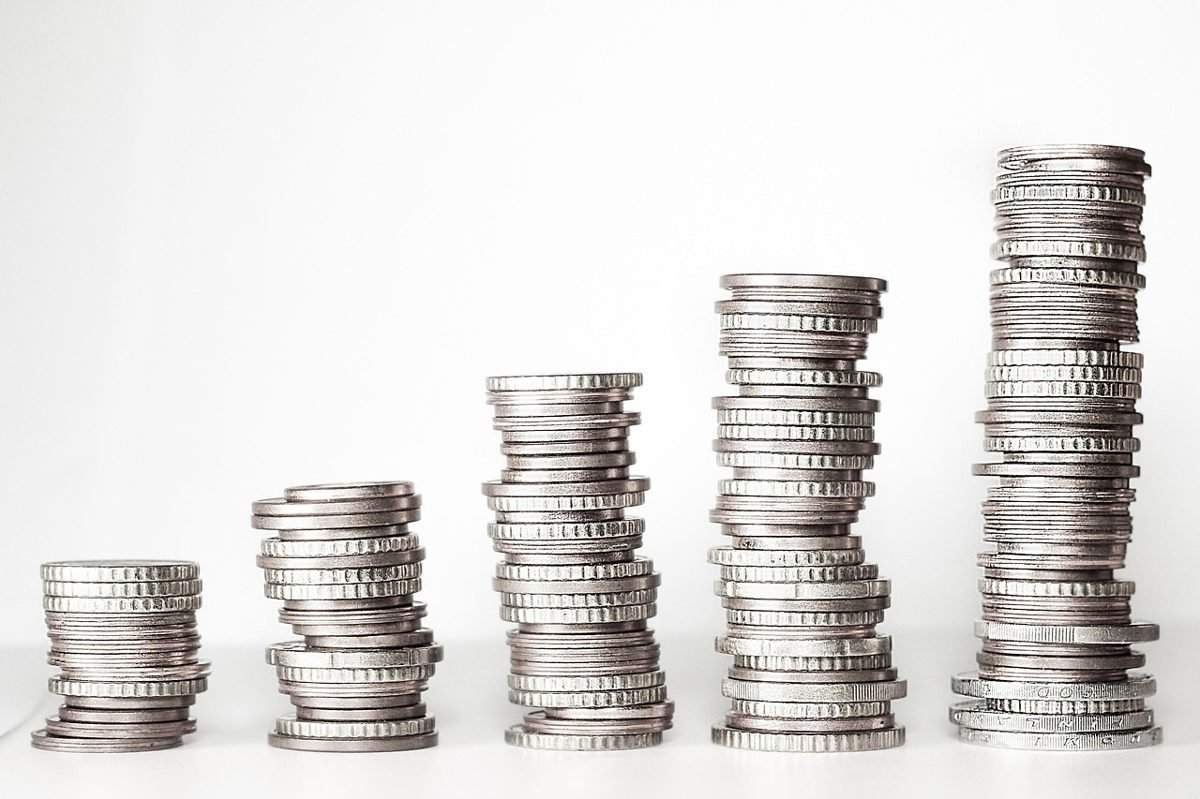
Here is the basic picture. Put $1,000 in an account that earns 7 percent per year. After one year you have $1,070. In year two, you earn 7 percent on $1,070, not on $1,000, so you gain $74.90 instead of $70. The difference looks tiny, but the gap widens every year. After 10 years the balance is about $1,967, after 20 years about $3,870, and after 40 years about $14,974, all from one $1,000 deposit and no additions.
The same engine works against you when you owe money. A $5,000 credit card balance at 22 percent, left alone for five years, would grow to nearly $15,000. Understanding compound interest at 25 means seeing both sides: it builds wealth when you save and destroys it when you carry high-interest debt. For the debt side of the story, read the real cost of credit card debt.
The compound interest formula in plain English
The standard formula is A = P(1 + r/n)^(nt), where P is your starting amount, r is the annual rate, n is how many times per year interest compounds, and t is the number of years. You do not need to memorize it. A spreadsheet or online calculator will do the work, but knowing the parts shows you which lever matters most.
There are three levers: the amount you put in, the rate you earn, and the time you give it. Of the three, time is the only one that 25-year-olds have in abundance, and it is the one you cannot buy later. When you think about compound interest at 25, picture time as the multiplier that sits on top of everything else.
Compounding frequency matters less than most people expect. Daily, monthly, and annual compounding produce similar results at normal rates. A $5,000 deposit at 7 percent grows to about $38,000 after 30 years with annual compounding and about $40,600 with monthly compounding. Focus on the rate, the deposit, and the years instead of agonizing over the schedule.
The rule of 72: a mental shortcut
The rule of 72 estimates how long it takes money to double. Divide 72 by the annual return. At 6 percent, money doubles roughly every 12 years. At 7 percent, about every 10 years. At 10 percent, about every 7 years. Run that math across a 40-year career and you see why compound interest at 25 can be dramatic.
| Annual return | Years to double (72 ÷ rate) | Doublings from 25 to 65 |
|---|---|---|
| 4% | 18 | about 2.2 |
| 6% | 12 | about 3.3 |
| 8% | 9 | about 4.4 |
| 10% | 7.2 | about 5.5 |
The rule also works for debt and inflation. At 3 percent inflation, prices double about every 24 years. That is why leaving savings in a low-paying account quietly costs you purchasing power, and why compound interest at 25 only helps if your money actually earns a rate above inflation.
Step 1: See what $200 a month becomes
Let’s turn the idea into dollars. The table below shows what a steady $200 monthly contribution grows to at three assumed annual returns, starting at age 25. These are illustrations with constant returns, which real markets never deliver, but they show the pattern clearly.
| Years invested | At 5% | At 7% | At 9% |
|---|---|---|---|
| 10 years (age 35) | $31,056 | $34,617 | $38,703 |
| 20 years (age 45) | $82,207 | $104,185 | $133,577 |
| 30 years (age 55) | $166,452 | $243,994 | $366,149 |
| 40 years (age 65) | $305,204 | $524,963 | $936,264 |
Look at the 7 percent column. Over 40 years you deposit $96,000 in total, yet the balance reaches about $525,000. More than 80 percent of that final number is growth, not contributions. This is what compound interest at 25 looks like when you let it run, and notice that most of the growth arrives in the final decade, which is exactly when waiting cost you the most.
Small changes in the rate also matter. Two extra percentage points, from 7 to 9 percent, nearly double the 40-year result. That is why keeping investment fees low is so important, a topic we return to in a later step.
Step 2: Understand the cost of waiting
The most important lesson about compound interest at 25 is what waiting costs. Suppose three friends each invest $300 per month at an assumed 7 percent annual return, and each stops at 65. The only difference is when they start.

| Starting age | Years investing | Total contributed | Balance at 65 |
|---|---|---|---|
| 25 | 40 | $144,000 | $787,444 |
| 35 | 30 | $108,000 | $365,991 |
| 45 | 20 | $72,000 | $156,278 |
The person who starts at 25 contributes only $36,000 more than the person who starts at 35, but ends with more than double the balance. A ten-year delay costs over $400,000 in this example. The first years of compound interest at 25 are the most valuable dollars you will ever invest, because they have the longest runway to multiply.
This does not mean you are doomed if you start later. It means the best time to begin is as soon as your budget allows, and the second-best time is today. If you are older than 25 and reading this, the guide on how to start investing for retirement at any age shows how to catch up.
Step 3: Try the early-starter experiment
Here is a famous comparison that shows the power of an early start. Emma invests $300 per month from age 25 to 35, a total of only $36,000, and then never adds another dollar. Liam waits until 35 and invests $300 per month for 30 years, a total of $108,000. Assume both earn 7 percent annually.

At age 65, Emma’s balance is about $421,000. Liam’s is about $366,000. Emma contributed one-third as much money and still finished ahead, because her early deposits had an extra decade to compound. That single result sums up compound interest at 25: early dollars do the heavy lifting.
Of course, the best plan is not to stop after ten years. If Emma continued contributing, she would end with far more than either. The lesson is to start early and keep going. Consistency plus time is the formula that makes compound interest at 25 so effective for ordinary earners.
Step 4: Use accounts that let compounding work
Where you hold your money affects how well compounding works. Taxes and fees are small leaks that grow every year, so the best accounts for compound interest at 25 are the ones that minimize both.
The workplace 401(k) is usually the first stop. Contributions come out of your paycheck automatically, and many employers match part of what you put in. A match is an instant return that no investment can promise, so capture all of it before anything else. For a refresher on how the plan works, see what a 401(k) is and how it works.
The Roth IRA is the second stop for many young earners. You contribute after-tax dollars, the money grows tax-free, and qualified withdrawals in retirement are tax-free too. For 2026 the contribution limit is $7,500, with income limits that begin at $153,000 for single filers. Because you are likely in a lower tax bracket at 25 than you will be later, paying tax now can be a smart trade. The walkthrough how to open a Roth IRA shows the steps, and Roth IRA vs traditional IRA compares the two.
For short-term goals and your emergency fund, use a high-yield savings account. Interest compounds there too, with far less risk, though the rate is lower than long-term investing. The guide to high-yield savings accounts explains what to look for.
Step 5: Invest in low-cost funds
A savings account compounds interest. An investment account compounds returns from stocks, bonds, or funds. Over long periods, diversified stock funds have historically outpaced savings accounts, though with real ups and downs along the way. For most people in their twenties, a simple low-cost index fund or target-date fund is enough to benefit from compound interest at 25 without needing to pick individual stocks.
Fees deserve special attention. A fund that charges 1 percent per year may sound cheap, but compounding works on fees too. Over 40 years, a 1 percent fee can consume nearly a quarter of your final balance compared with a fund charging 0.05 percent. Always check the expense ratio before you buy. If you want a simple starting point, read how to invest in index funds and what an ETF is.
| Annual fee | $300/month for 40 years at 7% gross | Approx. balance |
|---|---|---|
| 0.05% | Net return about 6.95% | $776,000 |
| 0.50% | Net return about 6.5% | $685,000 |
| 1.00% | Net return about 6.0% | $597,000 |
| 1.50% | Net return about 5.5% | $522,000 |
The pattern is clear: compound interest at 25 is a force multiplier, but fees reduce the multiplier. Choosing low-cost funds is one of the few things you fully control. For help picking a starting investment mix, how to build a smart investment portfolio from scratch explains the basics.
Step 6: Automate your contributions
The enemy of compound interest at 25 is not bad markets. It is inconsistency. People who wait for the perfect moment, skip months when money is tight, or stop during downturns give up the benefit. Automation removes those temptations.

Set up a transfer to your retirement or investment account for the day after payday. Start with an amount you will not notice, even $50 or $100, and raise it whenever you receive a raise. If your employer offers automatic escalation in the 401(k), turn it on. A one-percent annual increase barely changes your paycheck, yet over a decade it can double your savings rate.
Investing a fixed amount on a schedule is called dollar-cost averaging, and it also reduces the stress of trying to time the market. You buy more shares when prices are low and fewer when they are high, and you never have to decide whether today is a good day. For more on this idea, read dollar-cost averaging explained. Combined with early compounding, it is the simplest long-term strategy available.
Step 7: Protect the base with an emergency fund and no high-interest debt
Compounding only works if you leave the money alone. If a car repair forces you to sell investments or run up a credit card, you interrupt the growth and pay compounding interest to a lender instead of earning it. Build a small cash buffer first, ideally one to three months of expenses, and pay down any debt charging more than the returns you expect to earn.
A practical order for most 25-year-olds looks like this. First, build a starter emergency fund of about $1,000. Second, capture your full employer match. Third, pay off credit cards and other high-interest debt. Fourth, finish a larger emergency fund, then increase investing. If you need a plan for the first step, the sprint in how to save 1000 in 30 days can help you get started quickly.
That order protects compound interest at 25 from the biggest threats. You avoid forced withdrawals, you stop paying 20 percent or more to credit card companies, and you keep your investments invested through market ups and downs.
Three examples of compound interest at 25 in real life
Numbers feel abstract until they have a name. Here are three simplified stories that show how compound interest at 25 plays out for different budgets. All assume a steady 7 percent annual return, contributions through age 65, and no taxes, which is unrealistic but keeps the math clear.
Priya: $100 a month
Priya earns $42,000 and feels she cannot afford much. She starts with $100 per month at age 25. After 40 years, her balance is about $262,000 on $48,000 of contributions. It is not a fortune, but it is a substantial base that she can keep growing as her income rises.
Marcus: $300 a month plus a raise each year
Marcus starts with $300 per month and increases his contribution by $20 each year. His total grows faster than a flat $300 would, and his final balance reaches about $1.38 million under the same 7 percent assumption. The point is that small, automatic raises in savings are almost painless but dramatically increase the outcome.
Chloe: $500 a month from day one
Chloe lives with roommates and keeps expenses low, so she can invest $500 per month. After 40 years at 7 percent, her balance is about $1.3 million on $240,000 of contributions. Her story shows how a higher savings rate paired with compound interest at 25 can create real financial freedom.
| Monthly contribution | Total contributed (40 years) | Balance at 65 (7%) |
|---|---|---|
| $100 | $48,000 | $262,481 |
| $200 | $96,000 | $524,963 |
| $300 | $144,000 | $787,444 |
| $500 | $240,000 | $1,312,407 |
None of these results is guaranteed, and inflation will reduce what the money can buy in the future. Even so, the comparison shows that you do not need a high salary to benefit from compound interest at 25. You need a plan, a starting date, and patience.
Inflation and taxes: the reality check
Two forces quietly reduce what compounding delivers. Inflation raises the cost of living, so a dollar in 40 years buys less than a dollar today. If inflation averages 3 percent, a balance of $525,000 in 40 years has the buying power of roughly $161,000 in today’s dollars. That sounds discouraging, but it just means you should save more and aim for returns above inflation.
Taxes also matter. Interest in a regular savings account and gains in a taxable brokerage account can be taxed along the way. Tax-advantaged accounts such as a 401(k) and Roth IRA reduce or delay that drag. This is a major reason to use them as the home for compound interest at 25 instead of leaving long-term money in a taxable account when you have the choice.
To make planning more realistic, many people use a real return, which is the expected return minus inflation. A 7 percent return with 3 percent inflation is about 4 percent in real terms. Use that lower number to estimate how much to save, and treat higher actual results as a bonus. The guide to how much to save for retirement shows how to turn those estimates into a monthly target.
Savings accounts vs investing: where compound interest at 25 grows fastest
Both savings accounts and investments compound, but they serve different jobs. A savings account protects your principal and pays a modest rate that changes over time. Investments in stocks and bonds can grow faster over decades, but their value moves up and down, sometimes sharply. The right mix depends on when you need the money.
| Goal | Timeline | Better home for the money |
|---|---|---|
| Emergency fund | Anytime | High-yield savings account |
| Car, wedding, or trip | 1 to 3 years | Savings account or CD |
| Home down payment | 3 to 7 years | Mix of savings and conservative funds |
| Retirement | 30 to 40 years | 401(k), Roth IRA, diversified index funds |
The longer your timeline, the more room you have to ride out market swings, which is why retirement money is the natural home for compound interest at 25. Money you need within a few years should stay somewhere safer, even though it will grow more slowly. Matching each goal to the right account prevents you from being forced to sell investments at a bad time.
How to run your own compound interest at 25 calculation
You do not have to trust anyone’s table. Try your own numbers with a free tool, such as the compound interest calculator at Investor.gov, a site run by the U.S. Securities and Exchange Commission. Enter your starting balance, monthly contribution, expected return, and number of years, and the tool shows how the balance grows.
Run at least three scenarios. First, use a conservative return such as 4 or 5 percent. Second, use a moderate return such as 6 or 7 percent. Third, test what happens if you increase your contribution by 1 percent of salary each year. Seeing the range teaches you that compound interest at 25 is a sensible bet even when returns are modest, and that raising your savings rate matters nearly as much as chasing a higher return.
Update the calculation once a year. Enter your current balance and the years remaining until retirement, and see whether you are on track. If not, adjust your contribution or your retirement date instead of guessing.
Myths about compound interest at 25
Several beliefs keep young people from starting. Here are the most common ones, and why they do not hold up.
- “I need a lot of money to start.” You can begin with $25 or $50 a month, and many brokerages allow fractional shares.
- “I will start when I earn more.” Higher income often brings higher spending, and every year of waiting costs you growth.
- “The market is too risky.” Short-term swings are real, but a long timeline and diversification reduce the risk of a single bad year dominating your result.
- “Interest rates are too low to matter.” Even moderate returns produce large results over four decades.
- “I should pay off all debt first.” High-interest debt should be a priority, but low-rate debt can often coexist with investing, especially when an employer match is available.
Once you replace these myths with facts, taking advantage of compound interest at 25 becomes much easier to start and stick with.
Your first-year plan to use compound interest at 25
A structured first year turns knowledge into action. In month one, list your income and expenses, set a small emergency fund goal, and enroll in your workplace plan if you have one. In month two, open a Roth IRA and choose a low-cost fund. In month three, automate monthly contributions and set a calendar reminder to raise them every January or after each pay increase.
By the middle of the year, check your progress. Are you capturing the full match, avoiding new high-interest debt, and keeping your emergency fund growing? If not, make one adjustment at a time. By the end of the year, review your fees and investment mix, then repeat the process. A single year of consistent behavior builds the habits that let compound interest at 25 work for the next 40.
It also helps to track your net worth every quarter. Seeing your balance rise, even slowly at first, reinforces the habit. The early years can feel underwhelming because the growth is small compared with your deposits. That is normal, and it is the reason patience is the most important skill an investor can have.
What happens to compound interest at 25 when markets fall
Markets do not rise in a straight line. Over a 40-year career, you will probably live through several downturns, and some will be severe. This is where many beginners lose faith, sell at the bottom, and permanently damage the benefit of compound interest at 25. Understanding what a downturn means for your plan can help you stay calm.
When prices fall, your balance drops, but your contributions buy more shares at lower prices. Those shares benefit when the market recovers. A saver who keeps investing through a decline often ends up with more shares than one who stops, which strengthens the final result. Selling during a crash does the opposite: it turns a temporary paper loss into a permanent one and removes your money from the recovery.
Prepare in advance. Keep an emergency fund so you never have to sell investments to pay a bill. Diversify across many companies and, ideally, across stocks and bonds. Choose an allocation you can live with, because the best portfolio is the one you will not abandon. As your retirement date approaches, shift gradually toward bonds and cash to reduce the damage from a late-career decline. A younger investor can accept more volatility because there is time to recover, which is another advantage of compound interest at 25.
Compound interest at 25 and student loans
Many 25-year-olds carry student loans, and compounding works on those balances too. Federal loans typically have fixed rates that are lower than credit cards, while private loans may have higher or variable rates. The question is whether to pay extra on loans or to invest.
A simple rule of thumb is to compare rates. If a loan charges 7 or 8 percent or more, paying it down is a guaranteed return of that amount, which is hard to beat consistently with investments. If a loan charges 3 or 4 percent, investing alongside minimum payments can make sense, especially if it lets you capture an employer match. Whatever you choose, keep making required payments on time and never skip the match, because that money is free.
Some people split their extra cash, directing half toward loans and half toward investments. That approach lowers debt while still giving compound interest at 25 a head start. The right split depends on your interest rates, your job security, and your comfort with risk. If you are overwhelmed by choices, start with the match, then tackle the highest-rate debt first.
Roth IRA or 401(k) first?
At 25, many people ask which account to prioritize. A common order is: first contribute to your 401(k) up to the employer match, then fund a Roth IRA, then return to the 401(k) and raise your contributions. The match is an immediate return. The Roth IRA offers tax-free growth and flexible investment choices, and contributions can be withdrawn in an emergency without tax or penalty, though you should avoid that if possible.
If your employer offers a Roth 401(k), you can combine the benefits by contributing after-tax dollars inside the plan. Lower earners and younger workers often benefit from Roth contributions because they expect to be in a higher bracket later. As your income rises, adding traditional pre-tax contributions can reduce your current tax bill. A mix of both gives you flexibility in retirement. The article on traditional vs Roth 401(k) explains the trade-offs in detail.
The limits for 2026 are $24,500 for a 401(k) and $7,500 for an IRA, so there is room to grow your savings as your income increases. For now, remember that choosing a perfect account matters less than starting. Whichever you pick, automate it, keep the costs low, and let compound interest at 25 do its work.
One last point is worth repeating: do not wait to feel ready. Most successful long-term investors began with small amounts and learned as they went. Your first contribution teaches you more than months of reading, and every month you delay is a month of compound interest at 25 you cannot get back. Start with the amount you can manage, increase it when you can, and let the habit carry you forward.
In short, compound interest at 25 is less about picking winners and more about showing up month after month. Keep your expectations realistic, too. In the first five years, your balance will mostly reflect your own deposits, and the growth will look small. By year 15 or 20, growth begins to outpace contributions, and by year 30 it often dwarfs them. That slow start is not a sign that the plan is failing. It is the normal shape of compound interest at 25, and it is exactly why patience, more than brilliance, is the quality that separates successful savers from everyone else.
Mistakes that undermine compound interest at 25
- Waiting for a bigger paycheck: starting small now beats starting large later.
- Skipping the employer match: it is an immediate return that boosts every future dollar.
- Cashing out a 401(k) when you change jobs: you lose the growth and may owe taxes and penalties.
- Paying high fees: a 1 percent fund can cost you tens of thousands over a career.
- Panic selling in a downturn: selling locks in losses and breaks the compounding chain.
- Carrying credit card debt: interest at 20 percent or more outruns most investment returns.
- Treating investments like a checking account: frequent withdrawals interrupt the snowball.
Avoiding these mistakes matters as much as choosing the best fund. A simple, boring plan that you follow for decades usually beats an exciting plan that you abandon after two years. That is the quiet strength of compound interest at 25.
Your compound interest at 25 checklist
Use this list to turn compound interest at 25 into concrete steps you can finish in your first quarter.
| Action | When |
|---|---|
| Build a $1,000 starter emergency fund | This month |
| Enroll in your 401(k) and capture the full match | This week |
| Open a Roth IRA | Within 30 days |
| Choose a low-cost index or target-date fund | Within 30 days |
| Automate monthly contributions | Within 30 days |
| Pay off high-interest debt | Ongoing |
| Increase contributions by 1 percent | Every year or raise |
| Review fees and investment mix | Once a year |
Frequently asked questions about compound interest at 25
Is $100 a month really worth investing?
Yes. At an assumed 7 percent return, $100 per month from age 25 could grow to roughly $262,000 by 65. The habit also makes it easier to increase your contributions later.
What return should I assume?
Many planners use 5 to 7 percent for long-term stock-heavy portfolios before inflation, but the real number varies. Use conservative estimates for planning.
Should I pay off student loans or invest?
Compare the loan’s interest rate with expected returns. Federal loans with low rates may allow you to invest alongside payments, while high-rate loans are usually worth paying down first. Always capture an employer match.
Is it too late if I am older than 25?
No. Starting later requires larger contributions, but compounding still helps. Begin as soon as you can and increase savings over time.
What is the difference between simple and compound interest?
Simple interest pays only on the original deposit. Compound interest pays on the deposit plus accumulated interest, which makes growth accelerate over time.
Do I need a lot of money to start?
No. Many brokerages allow you to begin with small amounts and buy fractional shares. The key is to start and stay consistent.
Final thoughts on compound interest at 25
Compound interest at 25 rewards the simplest habits: start early, contribute consistently, keep costs low, and avoid interrupting the process. You do not need a perfect plan or a large income. You need to turn a small monthly amount into an automatic routine and let time multiply it.
Pick one action today. Open the account, set the automatic transfer, or raise your 401(k) contribution by one percent. A decade from now you will be glad you took advantage of compound interest at 25 instead of waiting for a better moment that never comes.
Disclaimer: This article is for informational purposes only and does not constitute financial advice. Examples use hypothetical constant returns, and actual investment results will vary and may involve loss of principal.
Related reading:
Keep reading

Treasury Bills vs I Bonds: 7 Smart, Simple Facts
Treasury bills vs I bonds: compare how each works, taxes, limits, and risks, with worked examples and a checklist to pick the smart, safe option for you.
Read the guide →
Best Investment Apps for Beginners: 12 Smart Easy Checks
Best investment apps for beginners compared by type: brokerage, robo-advisor, micro-investing. See real fee math, SIPC basics and a 12-point checklist.
Read the guide →
Dollar-Cost Averaging vs Lump Sum: 6 Smart, Proven Tests
Dollar-cost averaging vs lump sum: see what the research found, run a simulation with the math shown and use a 6-question checklist to decide.
Read the guide →Keep going: see the full Investing for Beginners Guide: Where to Start for every guide on Investing in a suggested order.