

Treasury bills and I bonds are the two simplest ways to lend money to the US government, yet they behave very differently. Treasury bills are short-term, sold at a discount, and pay you the difference at maturity. I bonds are a long-term savings bond whose rate adjusts with inflation and whose purchase is capped each year. Knowing which tool fits which job can add real money to your safe cash.
This guide explains how each one works, how the interest is taxed, what the limits are, where the risks hide, and when to pick one over the other. It includes worked examples with the math shown, a comparison table, and a checklist you can use before you buy. All rates in the examples are hypothetical illustrations, not forecasts or quotes.
This article is general education, not financial, tax, or legal advice. Check your own situation, and confirm current rates and rules at TreasuryDirect or with a qualified professional before you act.
Table of Contents
What Are Treasury Bills?
Treasury bills are short-term loans you make to the US government. The government sells them at a price below face value, and it pays you the full face value on the maturity date. The gap between what you paid and what you receive is your return. There are no regular interest payments along the way.
Most people shorten the name to T-bills. They are backed by the full faith and credit of the US government, which is why savers treat them as one of the safest places to park cash. They are not covered by FDIC insurance, because they are not bank deposits, but the backing comes from the government itself.
The basic facts about treasury bills
Treasury bills come in set terms, typically 4, 8, 13, 17, 26, and 52 weeks. The longest term is one year, so these are always short-term instruments. The minimum purchase is $100, and they are sold in $100 increments.
That small minimum matters. You can start with a few hundred dollars, or you can scale up to many thousands without changing the way the product works. Compare that with the strict yearly cap on I bonds, which is covered later in this guide.
How treasury bills differ from regular bonds
If you picture a bond as something that pays a coupon every six months, treasury bills are different. A T-bill has no coupon. You buy at a discount and collect face value at the end. For a broader primer on how debt securities work, see this explainer on what a bond is and how bonds work.
Because the maturities are short, the price of treasury bills moves far less than the price of a 10-year bond when interest rates change. That is a large part of their appeal as a place for money you will need soon.
How Treasury Bills Work: Discounts, Terms, and Payout
A treasury bills purchase has three moving parts: the face value, the price you pay, and the term. Suppose you buy a bill with a $1,000 face value for $980 and it matures in 26 weeks. At maturity you receive $1,000. Your $20 gain over 26 weeks is the interest, even though it was never labeled that way on a statement.

The lower the price relative to face value, the higher the return. A bill priced at $98.00 per $100 of face value returns about 2.04% over its life, because $2 divided by $98 is roughly 0.0204. Over a shorter term, the same gain would be a higher annualized rate.
Reading a treasury bills quote
Quotes often show a price per $100 of face value or a yield. Prices below $100 are normal. A four-week bill sits very close to $100 because there is little time for it to earn anything. A 52-week bill sits further below $100 because it must earn a full year of return.
When comparing treasury bills of different lengths, convert everything to an annual rate. A 2% gain in 26 weeks is not the same as a 2% gain in 52 weeks. The worked example below shows the conversion step by step.
What happens at maturity
On the maturity date, the face value is paid out. At TreasuryDirect it goes to the bank account you linked. At a brokerage it lands as cash in your account, and many brokers can reinvest it automatically in a new bill if you choose that option.
If you do nothing with that cash, it simply waits. That is the reinvestment decision at the heart of using treasury bills: every time one matures, you decide whether to buy another at whatever the going price is that day.
Worked Example: $5,000 in a 26-Week Treasury Bill
Here is a hypothetical walk-through. Example: Dana wants to put about $5,000 into a 26-week bill. Suppose the bill is priced at $98.00 per $100 of face value. These numbers are illustrations only, not a quote of current prices.
Step 1: Pick the face value in $100 steps
Dana has roughly $5,000 to invest. Because bills are sold in $100 increments of face value, she cannot buy a face value of exactly $5,102.04. She buys $5,100 of face value instead.
Step 2: Find the price she pays
Price equals face value times 0.98. So $5,100 multiplied by 0.98 equals $4,998.00. That is the cash that leaves her account on the purchase date.
Step 3: Find the return at maturity
After 26 weeks she receives the full $5,100. Her gain is $5,100 minus $4,998, which is $102.00. As a percentage of what she paid, $102 divided by $4,998 is about 2.04% for the 26 weeks.
Step 4: Annualize it
To compare treasury bills with a one-year product, double the half-year return. Simple annualizing gives 2.04% times 2, about 4.08% per year. If she rolled the proceeds into another bill at the same hypothetical price and compounded, the figure would be (1.0204 squared) minus 1, about 4.12%. Compounding is explained further in this guide to compound interest with formulas and examples.
Step 5: Take out federal tax
Suppose Dana is in the 24% federal bracket. Tax on $102 of interest is $102 times 0.24, or $24.48. She keeps $77.52, which is about 1.55% of her $4,998 over the half year. Because treasury bills are exempt from state and local income tax, there is no state tax to subtract.
The takeaway: the headline yield on treasury bills is not what you keep. The after-tax number is what you compare against alternatives.
What Are I Bonds?
An I bond is a US savings bond whose interest rate has two parts: a fixed rate and an inflation rate. The fixed rate is set when you buy and stays the same for the life of that bond. The inflation rate resets every six months, based on changes in the consumer price index for all urban consumers (CPI-U).

I bonds are sold electronically only, through TreasuryDirect. Paper I bonds bought with a federal tax refund (the Tax Time Savings Bond program through Form 8888) ended for purchases starting January 1, 2025. Electronic purchase is now the only route.
Purchase rules for I bonds
The minimum is $25, and you can buy any exact dollar amount above that, so you do not need round numbers. The annual limit is $10,000 per person per calendar year, tied to your Social Security number. The limit counts what you buy for yourself, so a couple can each buy up to $10,000 under their own accounts.
You can also buy an I bond as a gift. The recipient needs their own TreasuryDirect account. The gift uses the recipient’s limit rather than yours, which gives a little room for family planning.
How long you hold an I bond
You cannot redeem an I bond during the first 12 months. If you redeem before 5 years, you lose the last 3 months of interest. After 5 years there is no penalty, and the bond keeps earning interest for up to 30 years.
These timing rules are the biggest practical difference from treasury bills, which you can hold to a short maturity and then walk away from with no penalty. Treat I bonds as money you can leave alone for at least a year, and ideally five.
How I Bond Rates Work: The Composite Rate Formula
The rate that matters is the composite rate. It combines the fixed rate and the inflation rate with this formula: composite = fixed + 2 x semiannual inflation + (fixed x semiannual inflation). The semiannual inflation figure is about half of the annualized inflation number that gets announced.
The last piece, fixed times semiannual inflation, is small. It exists because the two parts interact. Most of the composite rate comes from the fixed rate plus twice the six-month inflation rate.
The May to October 2026 rates
For I bonds issued from May 1 to October 31, 2026, the fixed rate is 0.90%. The inflation component is 3.34% annualized for six months, and the composite rate is 4.26% annualized for the first six months. These are the rates TreasuryDirect announced on May 1, 2026, as reported in a Tipswatch article on the I bond fixed rate.
Rates reset around November 1 and again around May 1. New I bonds bought on or after November 1 will carry a new fixed rate, which could be different from 0.90%. Check TreasuryDirect before you buy, because the fixed rate you lock in applies for the bond’s whole life.
Worked example: $10,000 in I bonds
Example: Marcus buys $10,000 of I bonds before October 31, 2026, using the rates above.
- Fixed rate: 0.90%.
- Annualized inflation component: 3.34%, so the semiannual figure is 3.34% divided by 2, which is 1.67%.
- Composite: 0.90% + (2 x 1.67%) + (0.90% x 1.67%) = 0.90% + 3.34% + 0.015% = 4.255%, which rounds to the published 4.26%.
- Interest for the first six months: $10,000 x 4.26% / 2 = $213.00.
The second six months depends on the next inflation reading, which nobody knows yet. Suppose, purely as an illustration, the annualized inflation component drops to 2.0%. The semiannual figure is 1.0%, so composite = 0.90% + 2.00% + 0.009% = 2.909%, about 2.91%.
The balance is now $10,213. Six months at 2.91% annualized earns about $10,213 x 2.909% / 2, which is $148.55. After 12 months the bond would be worth about $10,361.55, if you could keep all of that interest.
The 12-month early redemption cost
If Marcus redeems at exactly 12 months, he gives up the last 3 months of interest. Those three months are about half of the second period’s $148.55, or roughly $74.27. His value after the penalty is about $10,287.27, so his interest is about $287.27. That is an approximation, since TreasuryDirect credits interest monthly, but it shows the size of the cost.
How the composite rate changes with inflation
The table below holds the fixed rate at 0.90% and varies the annualized inflation component. All the inflation values are hypothetical.
| Annualized inflation component (hypothetical) | Semiannual inflation | Composite rate (fixed 0.90%) |
|---|---|---|
| 0% | 0.0% | 0.90% |
| 1% | 0.5% | 1.90% |
| 2% | 1.0% | 2.91% |
| 3% | 1.5% | 3.91% |
| 4% | 2.0% | 4.92% |
| 5% | 2.5% | 5.92% |
The inflation component can be negative. Even so, the composite rate floors at 0%, which means an I bond never loses face value. The fixed rate is why a higher fixed number is valuable: it adds to the return on top of inflation every single period.
Taxes on Treasury Bills vs I Bonds
Both products are taxed the same way at the top level: federal income tax applies, and state and local income tax does not. That state exemption is the quiet feature that makes both of them more attractive than their headline yields suggest, especially if you live in a high-tax state.
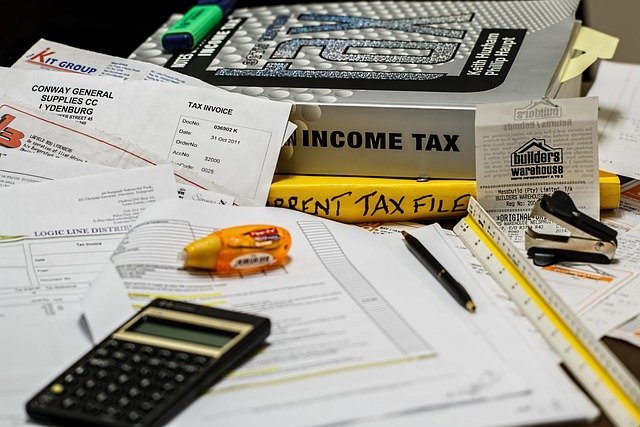
The difference is timing. Tax rules are detailed, so use this section as a map and then read the official guidance in IRS Publication 550, which covers investment income and expenses.
How treasury bills are taxed
Interest on treasury bills is federal taxable income. It is generally reported for the year it is paid at maturity. So a 52-week bill bought in the fall of one year is reported in the following year when it matures. Publication 550 has a section on Treasury bills within its coverage of US Treasury bills, notes, and bonds.
Treasury bills are exempt from state and local income tax when bought through TreasuryDirect or a brokerage. Be careful with T-bill funds. A fund that holds bills may not pass through the same exemption, so check the holdings and the fund’s tax information.
How I bonds are taxed
I bond interest is also federally taxable and exempt from state and local income tax. The special feature is deferral. You can generally wait to report the interest until you redeem the bond or it matures, or you can choose to report it each year. Publication 550 describes this under Series EE and Series I bonds, in the part on reporting options for cash method taxpayers.
Deferral can help if you expect to be in a lower bracket later. It can also build a larger tax bill in a single year if you hold for decades, so plan for it. If you are not sure how your bracket works, read this guide to what tax brackets are.
The education exclusion
Some people may be able to exclude I bond interest from income when the money pays for qualified higher education expenses. Requirements apply, including income limits. Because the rules are specific, read the IRS guidance or ask a tax professional before assuming it applies to you.
Why the state exemption matters
Take a saver in a 24% federal and 5% state bracket. Interest from a bank account is hit by both. Interest from treasury bills only by the federal rate. The worked comparison later in this article quantifies the gap, and the answer is large enough to change the ranking of alternatives.
Limits and Minimums: How Much Can You Buy?
The size of what you can buy is a quiet deciding factor. I bonds have a strict cap. Treasury bills do not have a comparable small cap for individuals, so a saver with a large pile of cash can put it all in bills if they want to.
I bond limits
The cap is $10,000 per person per calendar year, linked to your Social Security number, with a $25 minimum. Because the cap resets each calendar year, someone with extra cash can buy up to $10,000 in December and another $10,000 in January. That is a way to build a larger I bond holding over time, as long as you are comfortable with the lockup.
Treasury bills minimums
Treasury bills start at $100 and rise in $100 steps. There is no practical need to round to thousands. Small savers can use them, and large savers can use them. If a brokerage lets you buy new issues or older bills on the secondary market, you get additional choices of maturity date.
Setting up each account
A TreasuryDirect account needs a Social Security number or ITIN, a US address, and a linked checking or savings account. Brokerage accounts have their own sign-up steps. If you have not yet set up the basic bank accounts that feed these purchases, this explainer on savings versus checking accounts is a useful starting point.
Risks of Treasury Bills and I Bonds
Both products are about as safe as US dollar investments get on the question of whether you will be paid back. The risks that remain are subtler: lower future rates, inflation, access to your cash, and mistakes made while setting up accounts.
Reinvestment risk with treasury bills
Treasury bills mature quickly. When they do, you must buy another one at whatever price is available that day. If market rates have fallen, your next bill earns less. That is reinvestment risk. It is the price you pay for short maturity and flexibility.
The opposite is also true. If rates rise, short bills let you capture higher returns sooner than a long bond would. Short maturities cut both ways.
Inflation risk
Treasury bills do not adjust to inflation. If prices rise faster than the return on your bills, your buying power shrinks even though the dollar amount grew. Short terms help, since new bills reprice quickly, but there is no built-in link to the consumer price index.
I bonds have the built-in link, with a lag. The inflation component resets every six months, so a sudden spike takes time to appear in your rate. And if inflation falls, the rate drops with it, as the table above showed.
Liquidity and early exit risk
I bonds are locked for the first 12 months and cost you three months of interest if redeemed before five years. Treasury bills can be held to maturity, or sold before maturity at a brokerage, though the price you get may differ from what you expected.
Price risk when selling treasury bills early
If you buy treasury bills and sell before they mature, you receive the market price on that day. Because maturities are short, the swings are usually modest. But they exist, so do not treat a bill sold early as a guaranteed outcome.
Deposit insurance does not apply
Neither treasury bills nor I bonds are FDIC insured. They rely on the credit of the US government instead. For money that must stay in an insured bank, a high-yield savings account is the usual alternative.
Operational mistakes
Small errors cause real problems: forgetting to link a bank account, missing the I bond cap, or buying a fund that does not carry the state tax exemption. Slow down at setup and double-check each step.
Where to Buy Treasury Bills
You have several routes. Each one trades convenience against control. TreasuryDirect is the official site run by the US Treasury. A brokerage account gives you more flexibility and an easy view of everything you own. Bond funds and ETFs offer a hands-off option with their own tradeoffs.
Buying treasury bills at TreasuryDirect
You need a Social Security number or ITIN, a US address, and a linked checking or savings account. You can buy bills directly and receive the face value at maturity back into your bank account. The site is functional rather than polished, but it gets the job done.
Buying treasury bills at a brokerage
A brokerage lets you buy newly issued bills and, in many cases, existing bills on the secondary market. Some brokers offer an auto-roll feature that reinvests maturing bills for you. That helps if you want to stay invested without checking every month.
T-bill ETFs and funds
Treasury bill ETFs such as SGOV and BIL hold a rolling basket of short bills. Your return is the yield of the holdings minus the fund’s expense ratio, which is often 0.15% or less. They are easy to buy and sell, but they never mature at a set date, and the state tax treatment can differ from owning bills directly. Check what the fund holds. For a wider look at fund-based investing, see this guide on how to invest in index funds.
Where to buy I bonds
I bonds have only one door: TreasuryDirect. You cannot buy them at a brokerage. That keeps the process simple but also means you must be comfortable managing an account on the Treasury site.
For a fuller picture of the rates, terms, and purchase process, the NerdWallet guide to Treasury bills is a useful companion read.
Side-by-Side Comparison: Treasury Bills vs I Bonds
The table below lines up the main features of each product. Use it as a quick reference. Details can change, so confirm anything important on TreasuryDirect.
| Feature | Treasury bills | I bonds |
|---|---|---|
| How you earn | Bought at a discount, paid face value at maturity | Fixed rate plus an inflation rate, reset every six months |
| Terms | Typically 4, 8, 13, 17, 26, and 52 weeks | Up to 30 years; no penalty after 5 years |
| Minimum purchase | $100, in $100 steps | $25, any exact amount above |
| Purchase limit | No comparable small cap stated for individuals | $10,000 per person per calendar year |
| Where to buy | TreasuryDirect, brokerages, T-bill ETFs | TreasuryDirect only, electronic |
| Early access | Can sell at a brokerage; price may vary | Locked 12 months; lose last 3 months of interest before 5 years |
| Inflation protection | No, but short terms reprice quickly | Yes, with a lag |
| Federal tax | Yes, reported when paid at maturity | Yes, but deferral possible until redemption |
| State and local tax | Exempt (check funds) | Exempt |
| FDIC insured | No; backed by US government credit | No; backed by US government credit |
| Main risk | Reinvestment at lower rates | Inflation component can fall; lockup |
Reading the table
Treasury bills win on flexibility and size. I bonds win on inflation linkage and the ability to defer tax. Neither is a growth investment. They are tools for safety and predictability.
12-Month After-Tax Comparison: A Worked Example
To make the comparison concrete, the next example puts $10,000 into each option for 12 months. All rates are hypothetical illustrations, and the tax brackets are a made-up 24% federal and 5% state. A third column adds a taxable savings account so the state exemption is visible.
Assumptions
- Treasury bills: a 26-week bill priced at $98.00 per $100 of face value, rolled once at the same hypothetical price, bought in $100 face-value steps.
- I bond: the 4.26% first-half composite rate from the earlier example, a hypothetical 2.91% second-half rate, and redemption at month 12 with the three-month interest penalty.
- Savings account: a hypothetical 4.0% APY, taxed at both federal and state rates.
The treasury bills math
With $10,000 and a $98.00 price, the largest face value in $100 steps is $10,200, costing $9,996, and $4 is left over. After 26 weeks the holder has $10,200 + $4 = $10,204. That buys $10,400 of face value for $10,192, leaving $12. After the second 26 weeks the holder has $10,400 + $12 = $10,412. Pre-tax interest is $412.
Federal tax at 24% is $98.88. The state tax is $0. After tax, the holder keeps $313.12, or 3.13% on $10,000.
The I bond math
From the earlier example, the interest after the three-month penalty is about $287.27. Federal tax at 24% is $68.95, and state tax is $0. After tax the holder keeps about $218.33, or 2.18%. The I bond is also redeemed at month 12 in this example, which is the worst-case timing because of the penalty.
The savings account math
A 4.0% APY on $10,000 earns $400. Federal tax at 24% is $96, state tax at 5% is $20, and the total is $116 (a simplification that ignores any deduction for state tax). The saver keeps $284, or 2.84%.
Results
| Hypothetical result on $10,000 | Treasury bills (rolled twice) | I bond (redeemed at month 12) | Taxable savings account |
|---|---|---|---|
| Pre-tax interest | $412.00 | about $287.27 | $400.00 |
| Federal tax at 24% | $98.88 | about $68.95 | $96.00 |
| State tax at 5% | $0 | $0 | $20.00 |
| Interest kept after tax | $313.12 | about $218.33 | $284.00 |
| After-tax return | 3.13% | 2.18% | 2.84% |
What this example does and does not show
In this scenario the treasury bills come out ahead, and the I bond lags. The I bond lags for two reasons: the second-half inflation assumption is lower, and the redemption at month 12 triggers the penalty. Change either assumption and the result moves.
The savings account comparison has a lesson of its own. To match the after-tax result of the treasury bills in this example, a taxable account in a 29% combined bracket would need roughly 4.41% (3.13% divided by 0.71). The state exemption is worth real money.
If the I bond were held for five years or more, there would be no penalty, and the picture could look very different, especially with a fixed rate that stays for the life of the bond. Do not read any single scenario as a forecast.
When to Use Treasury Bills
Treasury bills fit goals with a known date and a known amount. Think of money you will spend in the next year: a tax payment, an insurance premium, a home repair fund, or a down payment that is a few months away. The short maturity means you can line up the bill to arrive just before you need the cash.

Emergency fund overflow
Once you have a starter reserve in a bank account, extra emergency savings can go into treasury bills. The bills can be sold at a brokerage if needed, and the interest is exempt from state tax. If you are still building your reserve, start with this guide on building a three-month emergency fund.
Sinking funds and near-term goals
For a vacation, a car purchase, or a wedding payment, treasury bills can hold the cash for a few months and pay more than a checking account. Match the maturity to the goal date. If the goal moves, you may be able to sell at a brokerage or simply let the bill mature and wait.
A ladder of bills
You can spread money across several maturities, such as 4, 13, 26, and 52 weeks, so that something matures regularly. This works like a CD ladder, only with shorter steps and government backing. To learn how that structure works with bank products, read about the CD ladder strategy.
When treasury bills are the wrong tool
Treasury bills are not for long-term growth. If you will not touch the money for ten years, a diversified stock fund historically has a better chance of outpacing inflation, though with real risk. Treasury bills are for stability and safety, not for building wealth over decades.
When to Use I Bonds
I bonds fit money you can set aside for at least a year, preferably five, and where you care about inflation protection. They suit conservative savers who want a government-backed place for a slice of long-term safe money.
Longer safe money
If you already hold a solid emergency fund and have additional safe savings that you will not need for several years, I bonds can fill that bucket. The fixed rate stays with the bond, and the inflation piece keeps the rate responsive to rising prices.
Tax deferral planning
If you expect to be in a lower bracket later, such as in retirement, deferring I bond interest can make sense. Keep in mind that deferral builds up a tax bill. Plan for that in the year you redeem.
Annual cap strategy
Because of the $10,000 yearly limit, I bonds work best as a steady annual habit, not as a place for a large lump sum. If you hold more than the cap in safe money, the rest belongs elsewhere, such as treasury bills, a money market option, or an insured savings account.
When I bonds are the wrong tool
Skip I bonds for any cash you might need in the next 12 months. Also think twice if you need the money before five years and cannot afford the three-month interest loss. Treasury bills or a savings account are a better match for that timeline.
Mixing Treasury Bills and I Bonds in One Plan
You do not have to pick only one. Many savers use treasury bills for near-term money and I bonds for the longer slice. The two products cover different time horizons, which is a natural way to divide safe cash into buckets.
A simple three-bucket layout
Example: Priya has $30,000 in safe cash. She might hold $10,000 in a high-yield savings account for her immediate emergency reserve. She might put $12,000 into treasury bills with staggered maturities for expenses expected within a year. And she might buy $8,000 of I bonds as long-term safe money. The split is an illustration, not a recommendation.
Watching the bank-account alternatives
Bank products can still win. A money market account or high-yield savings account offers deposit insurance, instant access, and no need to reinvest. After tax, the Treasury state exemption may or may not tip the scale, so run the numbers using your own rates and brackets.
Fitting it into the bigger picture
Safe assets are one part of a plan. For the other parts, such as investing for growth, see this overview of investing in 2026. Treasury bills and I bonds hold the stable part of the portfolio so you do not have to sell risky assets at a bad time.
Decision Checklist: Treasury Bills or I Bonds?
Work through these questions in order. A strong yes on a question points you to the product named next to it.
- Will you need this money in less than 12 months? If yes, lean toward treasury bills or an insured bank account, since I bonds cannot be redeemed in the first year.
- Do you have an emergency fund in an insured bank account? If no, build that first.
- Is your amount above $10,000 for this year? If yes, the extra will not fit in I bonds, so consider treasury bills for the rest.
- Will you leave the money alone for 5 years or more? If yes, I bonds become much more attractive, because there is no early redemption penalty.
- Does inflation protection matter more than a known date? If yes, lean toward I bonds.
- Do you want a known payout date and amount? If yes, lean toward treasury bills.
- Do you live in a state with income tax? If yes, the state exemption on both products raises their appeal over taxable bank interest.
- Do you want to defer tax? If yes, I bonds offer that option, while treasury bills are reported when the interest is paid at maturity.
- Are you willing to roll bills yourself, or will your broker auto-roll them? If neither, a longer-lasting product may suit you better.
- Have you checked today’s rates at TreasuryDirect or your broker? Do this before any purchase.
How to use the checklist
Count how many answers lean toward each product. If most lean toward treasury bills, start there. If they split, use both and size each bucket to its job. If you are unsure, start with a small amount and learn the process.
Common Mistakes to Avoid
A few mistakes come up again and again. Most are easy to prevent with a short pause before you click buy.
Chasing the highest headline rate
A rate is only one input. Check the term, the tax treatment, and the exit rules. A product with a slightly lower rate but better access can be worth more to you.
Forgetting the I bond lockup
Putting emergency money into I bonds and then needing it in month six is a classic error. The cash is not available, and the penalty rule applies even after the first year.
Ignoring reinvestment
Treasury bills mature and then sit as cash if you forget about them. Put a reminder on your calendar or use an auto-roll feature.
Assuming T-bill funds work like bills
A fund holding treasury bills is not the same as owning them. Fees apply, there is no fixed maturity, and the state tax treatment may differ. Read the fund’s documents.
Skipping the tax plan
Interest is federal income. Set aside money for the tax, especially if you defer I bond interest for years. A surprise tax bill can erase part of the gain.
Buying I bonds without checking the reset date
I bond rates reset around November 1 and May 1. A purchase close to a reset can lock in a different fixed rate than you expected. Check TreasuryDirect for the new announcement before buying near those dates.
How Treasury Bills Fit Into Your Tax Picture
Your marginal tax bracket determines how much of the interest you keep. At 12% federal, the after-tax return on treasury bills is higher than at 32%. The same is true for any interest income. The state exemption helps most where state income tax is high.
Planning the year of receipt
Because the interest on treasury bills is reported when paid at maturity, you can choose maturities that fall in the year you prefer. A bill that matures in January is reported in that new year, which can shift income. Do not make this a game, but be aware of it.
Keeping records
Save purchase confirmations and year-end tax forms. TreasuryDirect and brokerages issue tax documents that help you file. Compare them with your own records. If you have never filed with interest income, the basics are covered in this guide on how to file taxes with a W-2 and a 1099.
When to ask a professional
If you have a complicated return, large holdings, or education expenses that might qualify for the I bond exclusion, a tax professional can save more than they cost. The IRS guidance in Publication 550 is a good starting point for the questions to ask.
A Practical Start Plan for Beginners
Starting small is fine. The first purchase teaches you the process, and the second one goes faster.
Step by step
- Confirm your emergency reserve is in an insured bank account.
- Decide how much you will not need for at least 12 months.
- Open a TreasuryDirect account, or confirm that your brokerage offers treasury bills.
- Check today’s rates at TreasuryDirect or your broker. Rates move, so do not rely on old numbers.
- Buy a small first position, such as a $100 or $500 bill, and watch it mature.
- Decide whether to roll, spend, or move the proceeds.
- Add I bonds in the next calendar year, or this year if the lockup suits you.
Setting reminders
Put the maturity date, the November and May I bond reset windows, and tax time on your calendar. The earlier the reminder, the more time you have to act with a clear head.
Frequently Asked Questions About Treasury Bills and I Bonds
Are treasury bills safe?
Treasury bills are backed by the full faith and credit of the US government, so they are widely seen as one of the safest investments. They are not FDIC insured, and their market price can move if you sell before maturity.
How do treasury bills pay interest?
They are sold at a discount to face value, and you receive the full face value at maturity. The difference is your return. There are no separate coupon payments.
What is the minimum for treasury bills?
The minimum is $100, sold in $100 increments. Typical terms are 4, 8, 13, 17, 26, and 52 weeks.
How much can I invest in I bonds each year?
The limit is $10,000 per person per calendar year, with a $25 minimum purchase. Gifts count against the recipient’s limit, not the giver’s.
Can I cash out an I bond early?
Not during the first 12 months. After that, you can redeem, but before 5 years you lose the last 3 months of interest. After 5 years there is no penalty.
Are treasury bills and I bonds taxed by my state?
No, interest from both is exempt from state and local income tax. Both are subject to federal income tax. Check holdings if you use a fund, because a fund may not carry the same exemption.
When do I bond rates change?
The composite rate has a fixed part that stays with the bond and an inflation part that resets every six months. New rates are announced around May 1 and November 1, so check TreasuryDirect for the latest announcement.
Which is better, treasury bills or I bonds?
Neither is better in every case. Treasury bills suit money you need within a year and larger amounts. I bonds suit money you can leave alone for years and where inflation linkage matters. Many savers use both.
Can I lose money in treasury bills?
If you hold a bill to maturity, you receive the full face value. If you sell early, you receive the market price, which could be a bit lower. Inflation can also reduce what your money buys.
Where do I buy each one?
Buy I bonds only at TreasuryDirect. Buy treasury bills at TreasuryDirect, at a brokerage, or indirectly through a T-bill ETF.
Conclusion
Treasury bills and I bonds both let you lend to the government with strong safety and a state tax break, but they solve different problems. Bills are flexible, short, and unlimited in size for most savers. I bonds are long-term, inflation-linked, and capped at $10,000 per person per year.
Your concrete next step: write down one savings goal and its date, then use the decision checklist above to match it to a product. Next, visit TreasuryDirect or your broker to check current treasury bills rates and, if you are considering I bonds, the latest fixed rate before you buy. Remember that I bond rates reset around November 1, so look for the new announcement.
This article is general education, not financial, tax, or legal advice. Rates and rules change, so confirm details with official sources or a qualified professional.
Keep reading

Best Investment Apps for Beginners: 12 Smart Easy Checks
Best investment apps for beginners compared by type: brokerage, robo-advisor, micro-investing. See real fee math, SIPC basics and a 12-point checklist.
Read the guide →
Dollar-Cost Averaging vs Lump Sum: 6 Smart, Proven Tests
Dollar-cost averaging vs lump sum: see what the research found, run a simulation with the math shown and use a 6-question checklist to decide.
Read the guide →
What Is a Stock and How Does the Stock Market Work?
What is a stock and how does the stock market work? Learn how shares trade, why prices move, and how to start investing with real examples.
Read the guide →Keep going: see the full Investing for Beginners Guide: Where to Start for every guide on Investing in a suggested order.