

The lease vs buy a car question comes down to one trade. Leasing gives you a lower monthly payment and a newer car, but you build no ownership. Buying costs more each month at first, yet you end up with an asset and no mileage rules.
This guide explains how each option works, then puts numbers on it. You will see a worked example of a $35,000 car, a cost-per-mile table, a fee and tax walkthrough, a side-by-side comparison, and a checklist you can use at the dealership.
All dollar figures in the examples are hypothetical illustrations, not quotes, forecasts or current market rates. This article is general education, not financial advice.
Table of Contents
What lease vs buy a car really means
A car lease is a long-term rental contract. You pay to use the vehicle for a fixed term, often two to four years, and a set number of miles. When the term ends, you return the car, buy it, or lease another one.
A purchase works differently. You pay for the car in cash or with a loan, and the title becomes yours once the car is paid off. After that, you can keep driving it, sell it, or trade it in, and the value left in the car is yours.
The core trade-off in lease vs buy a car
Leasing usually means lower monthly payments and less cash due up front. The catch is that leasing can cost more over time than buying, because you keep paying for new cars and never reach a stage with no payments.
Buying tends to cost more per month during the loan, then drops to near zero in payment terms once the loan ends. The longer you keep the car, the better buying usually looks on paper.
Why the answer is personal
No single answer to the lease vs buy a car question wins for everyone. How many miles you drive, how long you keep cars, how steady your income is, and how much cash you have all push the result one way or the other.
The rest of this lease vs buy a car guide shows how to test your own numbers. If you also compare housing choices, the same logic appears in renting versus buying a home: flexibility and lower cost now on one side, ownership and long-run value on the other.
How leasing works
When you lease, you are not paying for the whole car. You pay for the part of its value that disappears while you drive it, plus a financing charge and fees. Understanding that one idea makes every quote easier to read when you weigh lease vs buy a car.
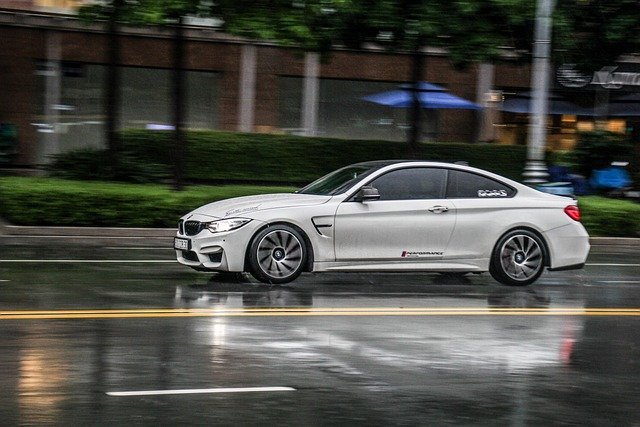
The lease parts that set your payment in lease vs buy a car
Four numbers drive a lease. Each one is negotiable or at least visible in the paperwork, so ask for all of them in writing.
- Capitalized cost: the total amount being leased. It includes the vehicle price, and can include sales tax, the acquisition fee and add-ons. It should reflect the price you negotiated, not the sticker price. If it is higher than the purchase price, push back.
- Capitalized cost reduction: anything that lowers that amount, such as a down payment, trade-in credit or rebates.
- Residual value: the projected value of the car at lease end. A higher residual lowers your payment, but it also raises the price to buy the car when the lease ends.
- Money factor: the lease finance rate, shown as a small decimal. A lower number is better.
The monthly payment formula for lease vs buy a car
Start with the negotiated sale price, not the sticker price, and subtract rebates. Subtract the capitalized cost reduction to get the adjusted capitalized cost. Then use two pieces.
The depreciation part is the adjusted capitalized cost minus the residual value, divided by the number of months. The rent charge, which comes from the money factor, is added on top. Add the two together and you have the base payment before any tax.
Reading the money factor in lease vs buy a car
A money factor looks deceptively small, such as 0.0025. That is easy to mistake for a tiny rate, so ask the dealer for the APR equivalent. A standard rule of thumb converts it: multiply the money factor by 2,400 to get roughly the APR.
So a money factor of 0.0025 is about a 6% APR. Treat that conversion as an approximation, and compare it with the APR you would pay on a loan for the same car.
What you get when the lease ends
At the end you can return the car, buy it, or lease another. You do not build equity during the term and you have no trade-in value to bring to the next deal. That is the price of the lower payment.
How buying works
Buying is the simpler half of lease vs buy a car. You agree on a price, add taxes and fees, subtract any down payment or trade-in, and finance what is left. Each payment covers interest plus a slice of the balance.
Loan basics for lease vs buy a car
Your monthly payment depends on three things: the amount you borrow, the interest rate, and the number of months. A longer loan lowers the payment but increases the total interest you pay over time.
Your credit profile drives the rate you are offered, so it helps to know where you stand first. Our guide on what a credit score is explains what lenders look at, and the walkthrough on how to get a car loan covers shopping for financing before you visit a dealer.
Ownership and equity in lease vs buy a car
As you pay down the loan, the gap between what you owe and what the car is worth can turn into equity. That equity can go toward your next car, or you can drive the car payment-free for years.
You also decide how to use the car. You can drive as far as you like, add accessories, or sell it at any time, though selling while you still owe more than the car is worth means covering the difference.
Lease vs buy a car: the payment math step by step
Numbers make the lease vs buy a car formula real. The example below is a clearly hypothetical illustration, built from assumptions you can change. It is not a quote or a forecast.
Assumptions for the hypothetical lease
- Negotiated price of the car: $35,000
- Lease term: 36 months, 12,000 miles per year
- Residual value: 60% of the price, which is $21,000
- Money factor: 0.0025 (about a 6% APR)
- Cash down (capitalized cost reduction): $2,000
- Acquisition fee: $795, paid up front
- Disposition fee at return: $395
- Sales tax: 6% on each monthly payment (a simplifying assumption, since tax rules vary by state)
Computing the lease payment
The adjusted capitalized cost is $35,000 minus $2,000, which equals $33,000. The depreciation part is ($33,000 minus $21,000) divided by 36, which is $333.33 per month.
The rent charge is ($33,000 plus $21,000) times 0.0025, which equals $135.00 per month. The base payment is therefore $468.33. With 6% tax on the payment, you pay about $496.43 per month.
Cash due at signing and total cost
At signing, you pay the first month ($496.43), the $2,000 down payment and the $795 acquisition fee, for $3,291.43. You then make 35 more payments and pay the $395 disposition fee when you return the car.
All in, one 36-month lease costs about $21,062 in cash, which is roughly $585 per month once you spread the down payment and fees across the term. The monthly payment on paper looks lower than that, which is why total cost matters more than the headline payment.
Computing the loan payment for comparison
For the purchase side, suppose you pay the same $35,000 price plus 6% tax ($2,100) and put $2,000 down. You finance $35,100 over 60 months at a hypothetical 7% APR.
That gives a payment of $695.02 per month, total loan payments of $41,701.32, and total interest of $6,601.32. The loan payment is about $199 higher than the lease payment each month, which is the cost of owning something at the end.
Lease vs buy a car: a six-year worked example
A fair lease vs buy a car comparison needs the same time frame for both sides. A lease ends in three years and a loan in five, so the cleanest approach is to use a six-year horizon and ask what you paid and what you still own at the end.
The two paths over six years
The leasing driver takes two back-to-back 36-month leases on similar cars, assuming the same terms for the second one. The buying driver takes the 60-month loan, then drives the car payment-free through year six.
The buyer also owns a six-year-old car. We assume it is worth 40% of the original price, which is $14,000. That resale figure is an assumption, since real values depend on the model, condition and mileage.
Results of the lease vs buy a car comparison
| Item (hypothetical) | Two 36-month leases | 60-month loan, keep car |
|---|---|---|
| Down payments | $4,000 (two leases) | $2,000 |
| Monthly payments, years 1-6 | about $35,743 (72 payments with tax) | $41,701 (60 payments) |
| Acquisition fees | $1,590 | $0 |
| Disposition fees | $790 | $0 |
| Total cash out | about $42,123 | $43,701 |
| Value of the car at year 6 | $0 | $14,000 (assumed) |
| Net cost after resale value | about $42,123 | $29,701 |
| Average net cost per month | about $585 | about $413 |
In this illustration the buyer spends slightly more cash, but holds a car worth $14,000, so the net cost is about $12,422 lower than the leasing path. That is the heart of the lease vs buy a car comparison over a long horizon.
What the example gets right and wrong
The example does not include insurance, fuel, registration or maintenance. Those costs exist on both sides, but they are not identical. They are left out so the two payment structures can be compared cleanly.
The result also changes if you change the assumptions. A resale value of 30% adds $3,500 to the buyer’s net cost, which gives $33,201. A value of 50% lowers it to $26,201. A lower loan rate shrinks the gap, and a higher lease residual shrinks it too.
The short-horizon view
Now look at month 36, the moment the first lease ends. The leaser has paid about $21,062 and owns nothing. The buyer has paid $27,021 in down payment and loan payments.
The buyer, though, still owes about $15,523 on a car worth an assumed $21,000, which is about $5,477 of equity. Subtract what is owed and the buyer’s net position is about $21,544, close to the lease cost. Over three years, the two paths are much closer than the monthly payment suggests.
A third path: lease, then buy it out
You can lease for 36 months and then buy the car at the residual price. In the example, the buyout is $21,000, plus 6% tax of $1,260, for $22,260. Total cash after six years is about $43,322, and the car is worth an assumed $14,000.
That nets out to about $29,322, within a few hundred dollars of the loan path. The result shows that a lease that ends in a buyout can be an expensive way to buy, or a cost-neutral one, depending on how the residual compares with the real market value.
Mileage limits and cost per mile
Mileage is the most common surprise in a lease vs buy a car decision. Leases carry an annual cap, commonly between 10,000 and 15,000 miles per year. The cap is part of the price, since the lessor needs to estimate what the car will be worth at the end.
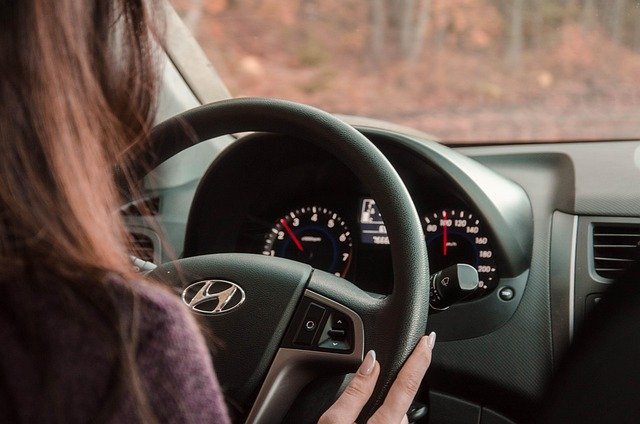
What excess miles add to lease vs buy a car
Drive past the cap and you pay for every extra mile. Excess miles commonly cost 15 to 30 cents each. The table below shows the bill for a few overage levels, using a hypothetical lease with a 36,000-mile total allowance.
| Miles over the cap | At 15 cents | At 20 cents | At 25 cents | At 30 cents |
|---|---|---|---|---|
| 1,000 | $150 | $200 | $250 | $300 |
| 3,000 | $450 | $600 | $750 | $900 |
| 6,000 | $900 | $1,200 | $1,500 | $1,800 |
| 9,000 | $1,350 | $1,800 | $2,250 | $2,700 |
Your yearly driving versus a 12,000-mile cap
Here is how different yearly driving habits play out on a three-year lease with a 12,000-mile cap, using a 25-cent excess charge. These are illustrations only.
| Miles per year | Total over 3 years | Miles over the cap | Excess mileage bill |
|---|---|---|---|
| 10,000 | 30,000 | 0 | $0 |
| 12,000 | 36,000 | 0 | $0 |
| 15,000 | 45,000 | 9,000 | $2,250 |
| 18,000 | 54,000 | 18,000 | $4,500 |
| 20,000 | 60,000 | 24,000 | $6,000 |
Unused miles usually do not earn a refund. If you drive 10,000 miles a year on a 12,000-mile lease, you paid for miles you did not use.
Cost per mile in lease vs buy a car over six years
Dividing total cost by miles driven shows how the lease vs buy a car result shifts with your driving. The leasing figures below add the excess mileage charges for two leases to the $42,123 base. The buying figure uses the $29,701 net cost.
| Miles per year | Lease cost per mile | Buy net cost per mile |
|---|---|---|
| 10,000 | $0.70 | $0.50 |
| 12,000 | $0.59 | $0.41 |
| 15,000 | $0.52 | $0.33 |
| 18,000 | $0.47 | $0.28 |
| 20,000 | $0.45 | $0.25 |
The buying column is a simplification, because a heavily driven car is worth less at resale than the $14,000 assumed. Even so, the pattern holds: the more you drive, the better each mile looks for the buyer, since the lease charges you extra for the miles above the cap.
Fees and charges in a lease vs buy a car comparison
In lease vs buy a car, the monthly payment is only part of the bill. Both leases and loans carry fees, and the fee lists are different. A fair comparison counts all of them.
Fees at the start of a lease vs buy a car
The acquisition fee typically runs from about $400 to over $1,200. It can be paid up front or rolled into the capitalized cost. Rolling it in means you pay money factor charges on it for the whole term.
Other start-up charges can include taxes, registration and any add-ons the dealer includes. Federal Regulation M requires leases to disclose the vehicle description, the amount due at signing, the payment schedule, itemized fees and the total paid over the lease.
Fees at the end of a lease vs buy a car
A disposition fee often applies when you return the car. You can also be billed for excess wear and use, which is damage beyond normal wear. If you dispute an appraisal, get an independent one and do not sign the disputed appraisal.
Ending a lease early can make you liable for the remaining payments, plus often a flat fee. Watch for balloon payments and disposition fees, and get them in writing before you sign. The lease terms are not like a loan you can refinance easily.
GAP coverage
GAP coverage pays the difference between what you owe on a lease and what insurance pays if the car is totaled or stolen. Many leases include it or require it. Rules vary by state, so check whether it is built into your lease or charged separately.
A fee checklist for the lease vs buy a car decision
- Ask for an itemized list of every fee, including the amount due at signing.
- Confirm the acquisition fee and whether it is paid up front or rolled in.
- Ask for the disposition fee, the early termination terms and any balloon payment.
- Find out the mileage cap, the excess mile charge and how wear and use is judged.
- Compare the lease capitalized cost with the cash purchase price of the same car.
Taxes in the lease vs buy a car decision
Taxes can tilt the lease vs buy a car math, and they have changed recently. Two federal items matter in October 2026: a new car loan interest deduction, and the end of federal electric vehicle credits. State rules add another layer.
Sales tax in lease vs buy a car
States treat leases differently. Some charge sales tax on the total of the monthly payments; Maine, for example, charges 5% according to its attorney general’s leasing page. Others tax the car price or tax in other ways, so the answer varies by state.
When you buy, sales tax is usually due on the purchase price, often up front or financed with the loan. Ask the dealer to show the tax line on both a lease quote and a purchase quote so you can compare them directly.
The new car loan interest deduction
A new federal deduction applies to car loan interest for tax years 2025 through 2028. It lets you deduct up to $10,000 of interest per year on a loan originated after December 31, 2024. The deduction is above the line, so you do not need to itemize.
Several conditions apply. The car must be new, meaning its original use begins with you, and its final assembly must be in the United States. It must be for personal use, and it can be a car, minivan, van, SUV, pickup or motorcycle under 14,000 pounds gross vehicle weight rating.
The deduction starts to phase out at modified adjusted gross income of $100,000 for single filers and $200,000 for joint filers. It falls by $200 for each $1,000 above those levels. Your lender provides the interest information on Form 1098, and you claim the deduction on Schedule 1-A.
Leases do not qualify. In our example, first-year interest is about $2,265. A taxpayer in the 22% bracket would save roughly $498 if the loan qualified, which narrows the lease vs buy a car gap only a little. The details are explained in a NerdWallet explainer on the car buyer tax changes, and our guide on tax brackets shows how a deduction turns into real savings.
Electric vehicle credits are gone
The federal EV credits ended for vehicles acquired after September 30, 2025. That covered the $7,500 new vehicle credit, the $4,000 used credit and the commercial credit under section 45W. A binding contract and payment by that date qualified.
Lessees could benefit before because the dealer could claim the commercial credit and pass savings along. In October 2026, there is no federal credit for new acquisitions, so a quote that depends on one is wrong. An EnergySage article on the ending EV tax credit has the timeline. State incentives vary, so check your state.
Business use and lease vs buy a car
If you use the car for business, leasing can bring a deduction for part of the payments, with rules such as inclusion amounts. IRS Publication 463 has a section called Leasing a Car. Read it or ask a tax professional before you assume a deduction.
Side-by-side lease vs buy a car comparison
This table sums up the main differences in lease vs buy a car. Use it as a quick lease vs buy a car reference, then test your own situation with the checklist later on.
| Factor | Lease | Buy with a loan |
|---|---|---|
| Monthly payment | Usually lower | Usually higher |
| Cash due up front | Often lower | Often higher (down payment, taxes) |
| Ownership | None; you return the car | Yours once paid off |
| Equity or resale value | No equity, no trade-in value | Equity builds as you pay and the car holds value |
| Mileage | Capped, commonly 10,000 to 15,000 per year | No cap |
| Wear and tear | Excess wear can be charged | Affects resale only |
| Changes to the car | Usually limited | Your choice |
| End of term | Return, buy, or lease another | Keep, sell or trade in |
| Early exit | Remaining payments plus often a fee | Sell and pay off the loan |
| Long-run cost | Higher if you keep leasing | Lower if you keep the car for years |
| Car loan interest deduction | Not available | Possible for qualifying new cars |
| Warranty | Short terms often fit within coverage | Repairs rise after warranty ends |
Insurance and running costs
Running costs sit outside the payment but still matter in a lease vs buy a car decision. They are similar in both cases, with a few differences worth knowing.
Insurance in lease vs buy a car
Whether you lease or buy, you will need coverage. Lessors typically set minimum requirements in the contract, and a lender will do the same on a loan. Read those terms before you sign so your policy meets them.
Our guide on how much car insurance you need explains coverage types, and the tips in lowering your car insurance rates help trim the premium. Get a quote on the exact car before you commit, since two models with similar prices can have different premiums.
Lease-end options
What happens at the end of a lease decides whether your lease vs buy a car choice paid off. You usually have three paths, and each one has a different financial result.
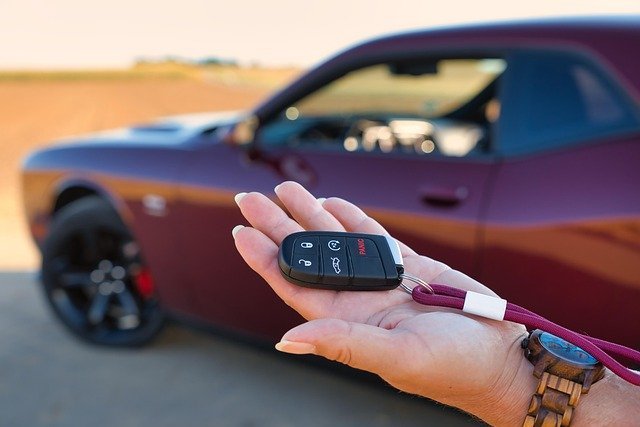
Return the car after the lease
Returning is the simplest. You pay any disposition fee, excess mileage and wear charges, then walk away. You keep nothing, but you also take no risk on the car’s future value.
Buy the car at the buyout price
The buyout is typically the residual value from your contract, plus fees and tax where they apply. Compare it with what similar used cars sell for. If the residual is below the market value, buying may be a bargain. If it is above, you can usually walk away.
Remember that a higher residual lowers your payment during the lease and raises the cost of buying later. That is a trade-off to weigh when you sign, not when the lease ends. To buy, you may need financing, and the steps in our car loan guide apply here too.
Lease another car
Many lessees roll into a new lease. The cycle keeps payments low and the car new, but it never ends. Over a long period, repeated leasing is the most expensive path in the six-year example.
Before leasing again, check your mileage, any fees and what the dealer offers. Negotiate each time, as if it were your first lease. Asking for the same terms you had last time is not a plan.
When leasing tends to fit
Some drivers get real value from a lease. The pattern is predictable, and you can check yourself against it.
Signs leasing wins lease vs buy a car
- You want a new car every two to four years and enjoy the change.
- You drive under the mileage cap and your commute is steady.
- You want a lower monthly payment and less cash up front.
- You value warranty coverage and fewer repair worries.
- You use the car for business and a deduction may apply.
When buying tends to fit
Buying suits a different set of habits. It rewards patience and long ownership.

Signs buying wins lease vs buy a car
- You drive many miles and do not want to count them.
- You keep cars six years or longer.
- You want to modify the car or treat it as an asset.
- You want no mileage or wear rules.
- You want the freedom of years with no car payment.
Cautions for buyers
A buyer faces higher monthly payments and more cash up front. Cars lose value fast in the early years, so a long loan on a new car can leave you owing more than it is worth. That is called being underwater.
A buyer also carries repair risk after the warranty ends and resale risk when the market changes. Keep a repair fund so a surprise bill does not become debt. Our guide to a three-month emergency fund shows how to build that cushion.
Budget, credit and affordability
The lease vs buy a car choice is also a budget decision. A lower payment is only helpful if the total fits your plan.
Budget first, then lease vs buy a car
List your income and fixed bills, then see what room is left for a car payment, insurance, fuel and repairs. A step-by-step method is in our guide on how to create a budget. Decide your all-in monthly car budget first, then shop for a deal that fits it.
Do not let a monthly payment decide for you. A dealer can hit nearly any payment by stretching the term or lowering the cash down, and both can raise the total you pay. Always compare the total cost, as we did in the worked example.
How credit shapes lease vs buy a car
Credit matters on both sides of lease vs buy a car. A stronger score generally earns a better rate on a loan and a better money factor on a lease. Lessors often favor applicants with solid credit, so a thin file can limit your options.
Keep revolving balances low before applying, since high utilization can drag a score down. Our explainer on what credit utilization is shows how to manage it.
How to negotiate a lease or a purchase
Negotiation matters here, because both deals have numbers you can bargain over. The key is knowing which numbers they are.
Negotiating lease vs buy a car deals
Negotiate the price of the car first, as if you were buying it. The capitalized cost should reflect that negotiated price, so a lower price lowers your payment. If the capitalized cost is higher than the purchase price, push back.
Then ask for the money factor and convert it to an APR to see if it is fair. Ask about the residual value, the acquisition fee, the mileage cap and all end-of-lease fees. Get every number in writing.
Read before you sign
A lease is a binding contract. You cannot revoke a lease once it is signed, so check every number before signing. Lease ads must disclose certain terms, such as the total due at delivery, so compare the ad with the contract.
The federal Consumer Financial Protection Bureau, at consumerfinance.gov, publishes consumer guides on auto financing. The attorney general of Maine also posts a practical consumer page on leasing that covers payments, fees and disclosures.
Common mistakes in a lease vs buy a car decision
Most costly lease vs buy a car errors come from skipping the math or the fine print. These are the ones to avoid.
Judging lease vs buy a car by the monthly payment
The monthly payment is the number dealers emphasize, and it hides the total. A lease payment looks cheap, but two or three leases in a row can cost more than a car you own. Always compare total cost over the same time.
Ignoring mileage in lease vs buy a car
Many people sign a lease without thinking about how far they drive. A job change or a longer commute can add thousands of miles. Estimate your yearly miles from past records, add a cushion, and buy extra miles up front if needed.
A lease vs buy a car decision checklist
Use this lease vs buy a car checklist to turn the ideas above into a decision. Answer each item honestly and count how many point to each side.
Lease vs buy a car questions about your driving
- Do you drive under 12,000 miles per year? If yes, leasing is more workable. If you drive over 15,000, buying is likely cheaper.
- Is your commute or job likely to change in the next three years? If yes, a lease carries more risk.
- Do you plan to keep the car six years or longer? If yes, buying tends to win.
Lease vs buy a car questions about money
- Is a low monthly payment more important than total cost? If yes, leasing helps.
- Can you pay the amount due at signing without draining your emergency fund?
- Can you cover a possible excess mileage or wear bill at the end?
- Would the new car loan interest deduction apply to you (new, US-assembled, within the income limits)? If yes, buying gets a boost.
Scoring your lease vs buy a car answers
If most answers favor a short term, low mileage and a lower payment, leasing may fit. If most favor long ownership, many miles and low long-run cost, buying probably fits. A split result means run your own numbers using the method in this guide.
Worksheet: run your own lease vs buy a car numbers
- Get a lease quote with capitalized cost, residual, money factor, fees and mileage.
- Get a purchase quote with price, tax, fees and a loan APR.
- Pick a horizon, such as six years, and add up total cash out for each path.
- Estimate the value of the car you would own at the end, and subtract it.
- Add any excess mileage you expect and any tax effects.
- Compare the net monthly cost and check it against your budget.
Frequently asked questions
Is it cheaper to lease or buy a car?
Leasing usually has a lower monthly payment and less cash up front. Over a long period, buying is often cheaper because you keep the car after the payments end. In the hypothetical six-year example, buying cost about $12,400 less after counting the car’s value.
What is the main idea behind the lease vs buy a car choice?
You are choosing between paying for use and paying for ownership. A lease covers the car’s drop in value during the term. A purchase covers the full price, and you keep what is left.
How many miles can you drive on a lease?
Limits vary by contract. They are commonly 10,000 to 15,000 miles per year. Check your contract, since extra miles are billed after the term ends.
How much do excess miles cost?
Excess miles commonly cost 15 to 30 cents each. Over 6,000 extra miles at 25 cents, the bill is $1,500. You can often buy more miles at signing for a lower rate.
Can you end a lease early?
Often yes, but it can be expensive. You may owe the remaining payments plus a flat fee. Read the early termination terms before signing.
Does the lease vs buy a car choice change my tax deductions?
Leases do not qualify for the new federal car loan interest deduction, which covers qualifying new, US-assembled cars bought with a loan. Business use is different. See IRS Publication 463 or ask a tax professional.
Can you buy the car at the end of a lease?
Yes, in most cases. The buyout price is usually based on the residual value in your contract, plus applicable fees and tax. Compare it with the car’s market value before you decide.
Does leasing help or hurt your credit?
A lease is a credit account like a loan. Paying on time can help your history, and missing payments can hurt it. Both involve a credit check when you apply, so read about how credit scores work before applying.
Is there a federal EV tax credit in 2026?
No. The federal EV credits ended for vehicles acquired after September 30, 2025. State incentives may still exist, so check your state.
Does the math change for a used car?
The lease vs buy a car method stays the same. Use a lower price and a different resale assumption, then compare total cost over the same horizon.
Conclusion
The lease vs buy a car decision has no universal winner. Leasing lowers the monthly payment and keeps you in newer cars, while buying costs more up front and rewards you for keeping the car. Mileage, ownership length and your budget decide which is smarter for you.
Your next step in the lease vs buy a car decision is simple: get a written lease quote and a written purchase quote on the same car, then run the six-year math from this guide with your own numbers. Compare the net cost per month, not the headline payment, before you sign anything.
This article is general education, not financial advice. Examples use hypothetical numbers, and your own terms, taxes and rules will differ.
Keep reading
Homeowners Insurance: 7 Smart, Essential Coverage Facts
Homeowners insurance explained: what an HO-3 covers, what it excludes, how deductibles and depreciation work, and 7 ways to cut the cost safely.
Read the guide →
Buy Now Pay Later: 7 Smart, Essential Facts to Know
Buy now pay later explained: pay-in-4 vs interest loans, fees, credit impact, CFPB findings, a worked example and a 10-question self-check.
Read the guide →
CD Ladder: 5 Smart, Proven Steps to Build One
A cd ladder spreads savings across CDs that mature in turn. See a worked $25,000 example, rate scenarios, taxes and a checklist before you build one.
Read the guide →Keep going: see the full Personal Finance Basics: Your Complete Guide to Money for every guide on Personal Finance in a suggested order.