

A paycheck to paycheck budget is not a punishment, a spreadsheet obsession, or a promise that you will never eat out again. It is a simple system that puts a small gap between the day money arrives and the day it is spent, so that one surprise bill stops turning into a month of stress. If you are reading this with a balance close to zero and payday still days away, you are far from alone.
Surveys of American workers keep finding that roughly six in ten say they live paycheck to paycheck, and that group includes people with comfortable salaries. Federal Reserve research on household well-being has also found that a meaningful share of adults would struggle to cover an unexpected $400 expense with cash. The issue is rarely discipline. Most people were simply never shown how to build a paycheck to paycheck budget that works when the margin is thin.
This guide walks you through the whole process in seven steps, with real numbers, sample budgets, and a 30-day plan. You do not need a raise, a finance degree, or special software to begin. You need one week of honest tracking, one small cut, and one automatic transfer. Everything else builds from there, and every step of this paycheck to paycheck budget guide is designed to be doable in an evening.
Table of Contents
What living paycheck to paycheck really means
Living paycheck to paycheck means your income is spent, or nearly spent, by the time your next payment arrives. There is no meaningful cushion left over. If your pay were delayed by two weeks, or a large bill showed up unannounced, you would have to borrow, skip something essential, or fall behind.
It is worth separating two situations that look similar from the outside. In the first, income is genuinely too low to cover basic costs, and no budgeting technique can fully fix that. In the second, income technically covers the basics, but the money flows out so quickly and unpredictably that nothing ever accumulates. A paycheck to paycheck budget is built mostly for the second situation, and it also helps in the first by showing exactly where the pressure points are.
The good news is that the second situation is very common, and a paycheck to paycheck budget is the fastest fix for it, and it responds quickly to structure. When you know what is due, when it is due, and how much is truly yours to spend, you stop guessing. Guessing is expensive. It leads to overdraft fees, late fees, and impulse charges on a credit card that quietly pile up.
Why most budgets fail when money is tight
If you have tried to budget before and quit after a few weeks, the plan was probably the problem, not you. Most popular budgeting advice assumes there is a comfortable surplus to allocate. When there is not, a rigid plan collapses the first time life interferes.
Three patterns cause most failures. The first is trying to fix everything at once. People cut every treat, track every cent, and burn out by week two. The second is building a plan around an average month when real months are uneven, with car registration in one, a school fee in another, and a holiday in a third. The third is ignoring timing. A budget can balance on paper and still fail because rent is due on the first while the paycheck lands on the fifth.
A workable paycheck to paycheck budget solves all three problems. It starts with a tiny change, it plans around the months that are actually irregular, and it organizes your money around pay dates rather than calendar months. For a deeper look at the psychology behind quitting, see our article on why most budgets fail in week two.
Before you start: gather your numbers
Take twenty minutes to collect the raw material. You will need your last two or three pay stubs, your recent bank and credit card statements, and a list of any loans or debts with their minimum payments. Having this in front of you turns vague worry into specific numbers, which is the raw material of any paycheck to paycheck budget, which is the first real relief most people feel.
Write down three things on a single page:
- Your take-home pay per paycheck and how often you are paid
- Every bill that must be paid, with its amount and due date
- Every debt, with its balance, interest rate, and minimum payment
Do not judge anything yet. This page is a map, not a report card. Many people discover at this stage that one or two bills are due on awkward dates, or that a forgotten subscription has been charging them for months. Those discoveries are the cheapest wins you will find in the whole process.
Step 1: Track every dollar for one week
You cannot build a useful paycheck to paycheck budget on guesses. For seven days, record every transaction, including small ones. Your bank app’s transaction history is enough, and a free tool can speed things up. Our comparison of the best free budgeting apps covers options that do not charge hidden fees.
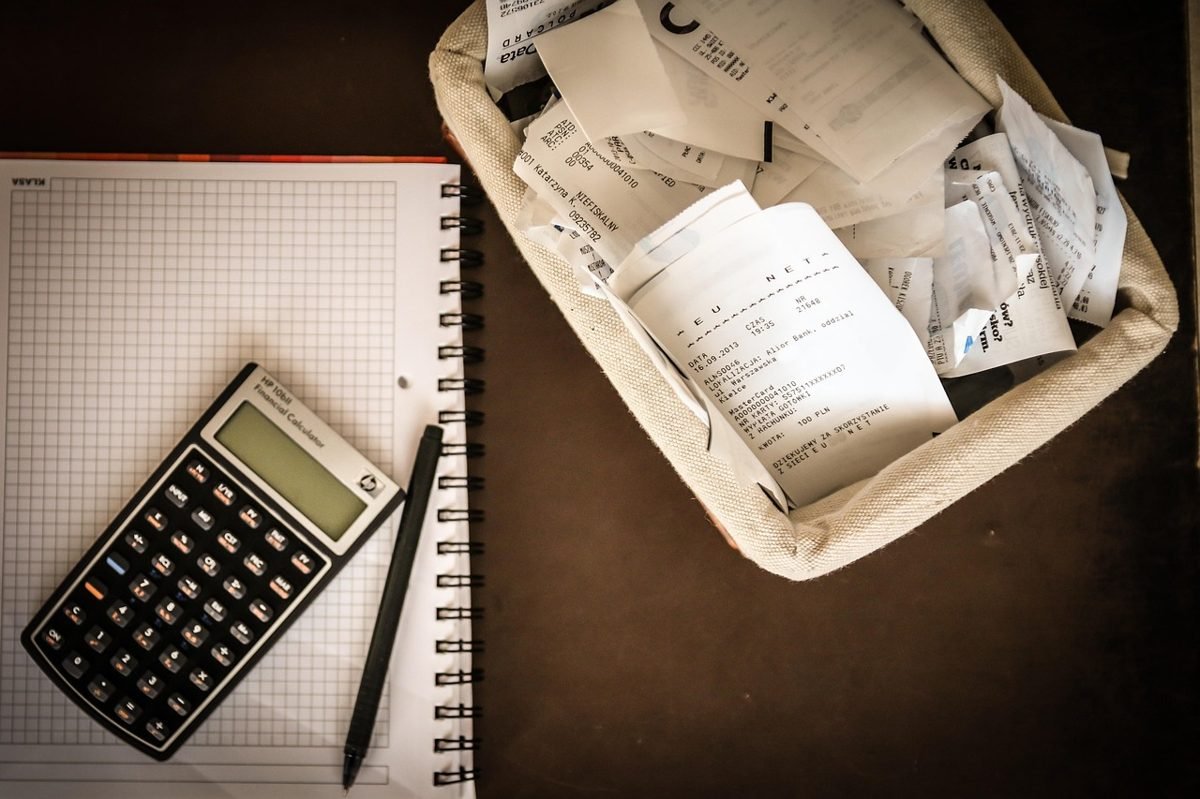
The goal is awareness, not restriction. Do not change your behavior this week. Simply watch it. Most people are surprised by what they see. The leak is rarely one big purchase. It is a stream of small recurring charges such as delivery fees, app subscriptions, convenience store stops, and “just this once” orders that add up to a hundred dollars or more over a month.
At the end of the week, sort your spending into three groups: needs, wants, and mistakes. Mistakes are charges you did not intend or no longer value, such as an unused subscription, a late fee, or an overdraft charge. This sorting exercise shows you where a paycheck to paycheck budget can recover money without changing your life.
Step 2: Calculate your real monthly baseline
Next, turn your tracking into a baseline. Add up your take-home pay for a typical month. If you are paid every two weeks, remember that two months a year include three paychecks, which is a gift to plan for rather than spend. Then list your fixed expenses, which are bills that stay roughly the same each month.

Typical fixed expenses include:
- Rent or mortgage payment
- Utilities, internet, and phone
- Car payment and insurance
- Minimum payments on loans and credit cards
- Subscriptions and memberships
Subtract fixed expenses from take-home pay. What remains has to cover groceries, gas, household items, and everything else. That number is your true flexible money, and it is usually smaller than people expect. Knowing it exactly is powerful, because it tells you what a realistic weekly spending limit looks like.
Finally, identify your irregular expenses. These are costs that come around once or twice a year, such as car registration, annual insurance premiums, medical copays, and holiday gifts. Divide each by twelve and treat the result as a monthly bill you pay to yourself. This single habit prevents more paycheck to paycheck stress than almost any other technique. Our guide to how to create a budget explains the full process in more detail.
Step 3: Cut one thing, not everything
This is the step where most plans go wrong. Trying to eliminate all discretionary spending at once is like starting a new diet by banning every food you enjoy. It works for about two weeks. A sustainable paycheck to paycheck budget makes one meaningful change at a time.
Pick the single largest non-essential expense from your tracking week and reduce or pause it for thirty days. Good first targets include unused streaming services, food delivery, and auto-renewing memberships. If you spend $120 a month on delivery and cut that in half by cooking a few simple meals, you have found $60 without touching anything that matters to you.
Next, call your providers. Phone, internet, and insurance companies often have lower-priced plans or loyalty discounts that they do not advertise. A twenty-minute call can save $15 to $40 a month for years. Ask directly whether a cheaper plan exists, and be willing to switch if it does.
The aim is to free up $60 to $150 a month. That is enough to start your safety buffer, which is the next step. It is also small enough that you will not feel deprived, which is the real secret to making a paycheck to paycheck budget last.
Step 4: Build a $500 starter buffer first
When money is tight, retirement accounts and investing are not the first goal. A small buffer is. Five hundred dollars will not make you rich, but it covers many common emergencies, such as a flat tire, a prescription, a pet vet visit, or a missed shift, without reaching for a credit card.

At $50 to $100 a month, you can reach $500 in five to ten months. Faster is better, so consider adding any windfall, such as a tax refund, a bonus, a cash gift, or money from selling something you no longer use. Put the buffer in a separate savings account so it is not mixed with spending money. A high-yield savings account pays more interest than a standard account and keeps the money slightly out of reach.
Why does this matter so much? Because of what happens without it. A $400 repair on a credit card at a typical rate of around 20 percent costs real money in interest if you carry the balance for months, and the monthly payment then squeezes next month’s paycheck. The buffer interrupts that chain. It is the foundation of every paycheck to paycheck budget that actually holds up.
Once you hit $500, do not stop. Move on to the larger goal described in our guide to building a three-month emergency fund. Even a slow, steady build changes how safe your finances feel.
Step 5: Use the bills account method
This step removes the daily mental math that makes life on a tight budget so tiring. Open a second checking account that is used only for fixed bills. Many banks offer free accounts with no minimum balance, so check for fees first.
The process works like this:
- On every payday, transfer the exact amount needed to cover that pay period’s share of your bills into the bills account.
- Pay rent, utilities, insurance, and other fixed bills only from the bills account.
- Treat whatever stays in your main account as your actual spending money for the period.
The effect is dramatic. You no longer wonder whether a $35 purchase might cause rent to bounce. If the money is in your main account, it is yours to spend. If it is not, you wait. This clarity is what makes a paycheck to paycheck budget feel calm instead of anxious, and it is the main reason people stick with a paycheck to paycheck budget once they try it.
If opening a second account feels like too much, you can get a similar effect with the envelope method or with sub-accounts, which many banks and apps offer. The tool matters less than the principle: separate the money that is already spoken for from the money that is free.
Step 6: Match your bills to your paydays
A paycheck to paycheck budget often breaks because of timing, not totals. Imagine rent of $1,200 due on the first, but your biggest paycheck arrives on the fifth. You have enough money for the month, but not when you need it. The answer is to change the due date, not to earn more.

Most lenders and utilities let you move your due date to a day that fits your pay schedule, often with a single phone call or a setting in your online account. Ask for dates shortly after each paycheck. If you are paid biweekly, aim to split bills between two paychecks so that neither one carries an overwhelming share.
Here is a simple way to organize it. List every bill by its due date. Assign each bill to the paycheck that arrives just before it. Add up the total for each paycheck. If one paycheck carries far more than the other, shift one or two due dates to even them out. This small administrative project can remove most of the month-end squeeze, and it costs nothing.
It also helps to know the reality of your pay calendar. If you are paid biweekly, you receive 26 paychecks a year. That means two months contain a third paycheck. Planning those two months in advance, and directing that extra money to your buffer or debt, is one of the easiest ways to make progress on a paycheck to paycheck budget.
Step 7: Automate your savings so willpower is not required
Willpower is unreliable, especially under financial stress. Automation is not. Once your $500 buffer exists, set up an automatic transfer of $25 to $50 from each paycheck into savings. Schedule it for payday, so the money moves before you can spend it.
At $50 per biweekly paycheck, you save about $1,300 in a year without making a single new decision. At $25 per paycheck, it is still $650, which is more than most people have today. The amount matters less than the habit. You can raise it later, whenever a bill ends or income rises.
Also automate your fixed bills where it makes sense. Autopay for minimum payments protects you from late fees and credit score damage. Just make sure the money will be in the account when the payment pulls, which is exactly what the bills account method guarantees. Our article on how to stop living paycheck to paycheck goes deeper into the habits that keep this system running.
A sample paycheck to paycheck budget with real numbers
Numbers make this concrete. Consider a household that takes home $3,400 a month, paid biweekly at $1,570 per paycheck, with two months a year including a third paycheck. Here is how their monthly fixed expenses look before any changes.
| Category | Monthly amount |
|---|---|
| Rent | $1,200 |
| Utilities, internet, and phone | $280 |
| Car payment and insurance | $520 |
| Minimum debt payments | $190 |
| Subscriptions | $60 |
| Total fixed expenses | $2,250 |
That leaves $1,150 for groceries, gas, household items, and personal spending. After a week of tracking, the household finds $85 a month in unused subscriptions and delivery fees. They cancel those, call their phone provider to save $15, and decide to direct $100 a month into savings. Here is the new picture.
| Category | Monthly amount |
|---|---|
| Fixed expenses (after cuts) | $2,235 |
| Groceries and household | $520 |
| Gas and transportation | $180 |
| Personal and fun spending | $215 |
| Irregular expenses fund | $150 |
| Savings buffer | $100 |
| Total | $3,400 |
Every dollar has a job, and there is a line for the unexpected. Within six months, the buffer is $600. When a $350 car repair arrives in month eight, it comes out of savings instead of a credit card. The household’s income did not change, but the outcome did. That is the whole promise of a paycheck to paycheck budget: not a dramatic life change, but a margin that keeps one bad month from becoming a debt spiral.
Which budgeting method fits a tight income?
Several well-known methods can work, and the best one is the one you will actually follow. Here is how the main options compare when money is limited.
The zero-based approach assigns every dollar of income a job until nothing is left unassigned. It suits people who want maximum control and do not mind regular check-ins. The 50/30/20 rule splits income into needs, wants, and savings. It is simple, but on a tight income, needs alone can exceed 50 percent, so you may need to adjust the percentages. Our breakdown of the 50/30/20 budget rule explains when it works and when it does not.
The envelope or category-limit method sets a fixed amount for each spending area and stops spending when the envelope is empty. It works well for groceries and personal spending. The pay-yourself-first method moves savings out of your account before anything else, which fits the automation step above.
For most people building a first paycheck to paycheck budget, a hybrid works best: a zero-based plan for fixed bills, a weekly limit for flexible spending, and an automatic savings transfer. Start simple and add detail only if you need it. A paycheck to paycheck budget that you follow beats a perfect one you abandon.
Making a paycheck to paycheck budget work with irregular income
If you are a freelancer, gig worker, tipped employee, or paid on commission, your paychecks vary. This makes budgeting harder, but not impossible. The key is to build your plan around your lowest typical month, not your best one.
Look at the past six to twelve months and find the lowest realistic monthly income. Build your fixed bills and essentials around that figure. In better months, the extra goes to a “smoothing” account that you draw from in leaner ones. Think of it as paying yourself a steady salary from an uneven stream.
A few extra rules help. Pay yourself a fixed amount on the same day each week or month. Set aside tax money immediately if you are self-employed, since a surprise tax bill can wreck any budget. And build your buffer a little larger, perhaps $1,000, because income gaps are more common. The official Consumer Financial Protection Bureau offers free tools and guides for managing uneven income that are worth bookmarking.
Handling debt on a tight budget
Debt is often the reason a paycheck to paycheck budget feels impossible. Minimum payments take a fixed bite out of every paycheck, and high interest keeps balances stubborn. Two principles help.
First, build the small $500 buffer before attacking debt aggressively. Without it, any emergency forces you back onto the card, and you lose ground. Second, once the buffer exists, choose a payoff method and stick to it. The snowball method pays the smallest balance first for quick wins, while the avalanche method targets the highest interest rate first to save the most money. Our comparison of debt snowball versus debt avalanche helps you decide.
If your balances are large and the interest is crushing you, it is worth exploring options such as a lower-rate consolidation loan or a nonprofit credit counseling agency. Read about whether a debt consolidation loan is worth it before committing. For a full payoff walkthrough, see how to pay off $10,000 in debt in 12 months.
Whatever you choose, keep your paycheck to paycheck budget focused on one goal at a time, and keep making at least the minimum payment on every account. Missed payments trigger fees and credit score damage, which makes everything more expensive. If you are rebuilding after trouble, our guide on credit utilization shows how your balances affect your score.
Small ways to add income without burning out
Cutting costs has limits. At some point, a paycheck to paycheck budget gets easier when income rises, even slightly. The goal is not a second full-time job. It is a modest, sustainable boost that goes directly to your buffer or debt.
Realistic options include selling items you no longer use, taking a few extra shifts, doing seasonal work, or monetizing a skill you already have, such as tutoring, bookkeeping, or design. If you want ideas that do not require much startup money, see our list of best side hustles to start in 2026.
One rule keeps extra income from disappearing: decide in advance where it goes. Direct the first $500 to your buffer, then split further income between debt and savings. Without a plan, extra money tends to vanish into slightly nicer groceries and slightly bigger takeout orders, and you end up exactly where you started.
Common paycheck to paycheck budget mistakes to avoid
Even a well-designed system can fail if you fall into familiar traps. Watch for these.
- Setting the bar too high. A plan that needs perfection will fail by week two. Start with one cut and one transfer, and add from there.
- Skipping the buffer to attack debt. Without any cash cushion, the first emergency sends you back to the credit card.
- Forgetting irregular expenses. Annual and seasonal costs are the number one reason budgets break. Set aside a little each month.
- Leaving no fun money. A budget with no room for enjoyment feels like punishment. Keep a small guilt-free amount in the plan.
- Letting lifestyle creep eat raises. When income rises, send part of the increase to savings before spending adjusts. See how to stop lifestyle inflation.
- Checking once, then forgetting. Spend ten minutes each week reviewing your accounts. Small corrections are far easier than big rescues, and they keep your paycheck to paycheck budget honest.
When something goes wrong, adjust the plan instead of abandoning it. One overspent week is data, not failure. Move the numbers, learn from the pattern, and continue.
The mindset shift behind a paycheck to paycheck budget
Numbers are only half of the story. Money stress is real, and it affects how people make decisions. When every dollar feels urgent, it is hard to think ahead. That is why the earliest wins matter so much. A $500 buffer is not just cash. It is relief, and relief makes better choices easier.
Try to think of your paycheck to paycheck budget as a cash-flow tool rather than a verdict on your worth. The question is not “Why am I bad with money?” but “What system would make this easier?” Systems beat willpower, which is why a paycheck to paycheck budget is built from automatic steps. A bills account, a due-date shift, and an automatic transfer do the hard work while you live your life.
If worry about money keeps you awake, you are not alone, and there are practical ways to calm it. Our guide on financial anxiety and how to stop worrying about money offers steps that complement the paycheck to paycheck budget itself. The article on money mindset sabotaging your finances covers beliefs that quietly hold people back.
A ten-minute weekly routine to keep your paycheck to paycheck budget on track
A paycheck to paycheck budget only works if you look at it. The good news is that the routine takes about ten minutes. Pick one day each week, such as Sunday evening, and make it your money check-in.
Open your accounts and ask four questions. Did the bills account receive its transfer? How much of this week’s spending limit is left? Is any bill due in the next seven days? Did the automatic savings transfer run? If every answer is yes, close the app and move on. If something is off, fix it now while the problem is small.
This tiny habit is what separates a paycheck to paycheck budget that lasts from one that fades. Most failures are not dramatic. They are slow drifts: a skipped transfer, a bill forgotten, a spending limit ignored for three weeks. A weekly check-in catches the drift early and keeps your paycheck to paycheck budget realistic as life changes.
Once a month, add a slightly longer review. Compare your actual spending with your plan, update any bill that changed, and decide whether to raise your savings transfer. Every quarter, shop one bill, such as insurance or internet, to see if you can pay less. A paycheck to paycheck budget is a living document, not a one-time project.
How a paycheck to paycheck budget changes at different income levels
The structure of a paycheck to paycheck budget stays the same at any income, but the priorities shift. Understanding where you fall helps you set realistic expectations and choose your next move.
At a lower income, perhaps under $2,500 a month after tax, housing and food take most of the money. Here your paycheck to paycheck budget should focus on lowering fixed costs, claiming every available benefit, and building the $500 buffer slowly but steadily. Local assistance programs, utility discounts, and community resources are worth exploring before cutting essentials further.
In the middle range, around $3,000 to $5,000 a month, there is usually more room to maneuver. A paycheck to paycheck budget here often reveals lifestyle spending that grew without notice. Cutting a few categories and automating savings can move you from zero margin to a healthy cushion within a year.
At higher incomes, living paycheck to paycheck is more about spending habits and debt. A paycheck to paycheck budget exposes where a large income is leaking into car payments, subscriptions, and dining. Surprisingly, the steps are identical: track, cut, buffer, separate, align, and automate. The only difference is the speed at which results appear.
Your 30-day paycheck to paycheck budget plan
Here is a simple schedule you can follow starting today. Treat it as a checklist, not an exam.
Days 1 to 7: Track every transaction. Gather pay stubs, statements, and your list of bills and debts. Do not change your spending yet.
Days 8 to 10: Calculate your income, fixed expenses, and flexible money. Add up your irregular expenses and divide by twelve.
Days 11 to 14: Choose one expense to cut. Cancel unused subscriptions and call two providers about lower rates.
Days 15 to 20: Open a separate savings account and a bills account if you want one. Ask lenders to move due dates so they follow your paydays.
Days 21 to 25: Set up automatic transfers for savings and autopay for fixed bills. Make sure the money will be there when the payments pull.
Days 26 to 30: Review the month. Where did you stay on plan, and where did you drift? Adjust one number, not ten, and set the buffer goal for next month.
By the end of the month, you will have a working paycheck to paycheck budget, a savings habit, and a much clearer picture of your money. You will also have the confidence of having done it.
Frequently asked questions about a paycheck to paycheck budget
How much should I save if I live paycheck to paycheck?
Start with $25 to $50 per paycheck and work toward a $500 buffer. At this stage, consistency matters more than the amount. As bills end or income rises, increase the transfer. Over time, aim for a full three- to six-month emergency fund.
Can I use a paycheck to paycheck budget if I am paid weekly or biweekly?
Yes. In fact, building the plan around pay periods is often easier than a calendar-month approach. Assign each bill to the paycheck that arrives just before it, and set a weekly spending limit for flexible costs.
Should I pay off debt or save first?
Build a small $500 buffer first, then focus on high-interest debt while continuing small automatic savings. This prevents emergencies from sending you straight back into debt.
How long does it take to stop living paycheck to paycheck?
Many people feel the first real relief within two to three months, once the starter buffer is in place. Fully breaking the cycle, with a larger emergency fund and manageable debt, usually takes six to eighteen months, depending on income and starting point.
Is it better to use an app or a spreadsheet?
Either works. Apps save time by syncing with your accounts, while spreadsheets offer total control. Choose whichever you are most likely to open every week. Our review of free budgeting apps can help.
What if my expenses are higher than my income?
Then the paycheck to paycheck budget needs two levers: cutting costs and raising income. Start by reviewing essentials such as housing and transportation, ask providers for lower rates, and look into local assistance programs. The CFPB and your state’s consumer resources can point you toward help.
Final thoughts on building your paycheck to paycheck budget
A paycheck to paycheck budget does not require perfection, a high income, or a complicated tool. It requires seven simple moves: track your spending, calculate your real baseline, cut one thing, build a $500 buffer, separate your bills, match due dates to paydays, and automate your savings. Each step is small. Together, they turn a stressful month into a calm, repeatable paycheck to paycheck budget routine.
Start this week with the first step. Track your spending for seven days, and write down what you learn. From there, your next goals are a full emergency fund and a longer-term plan to create a complete budget. For another perspective on research behind household financial resilience, review the Federal Reserve’s Survey of Household Economics and Decisionmaking.
Disclaimer: This article is for informational purposes only and does not constitute financial advice. Consider consulting a qualified financial professional about your situation.
Keep reading

Buy Now Pay Later: 7 Smart, Essential Facts to Know
Buy now pay later explained: pay-in-4 vs interest loans, fees, credit impact, CFPB findings, a worked example and a 10-question self-check.
Read the guide →
CD Ladder: 5 Smart, Proven Steps to Build One
A cd ladder spreads savings across CDs that mature in turn. See a worked $25,000 example, rate scenarios, taxes and a checklist before you build one.
Read the guide →
Savings Account vs Checking Account: 7 Smart, Easy Tips
Savings account vs checking account: see the real differences, fees, FDIC safety, and how to split a $4,200 paycheck with a simple worksheet.
Read the guide →Keep going: see the full Personal Finance Basics: Your Complete Guide to Money for every guide on Personal Finance in a suggested order.